

Czechia
The rank indicates the popularity of a country among users. By clicking on the 'Appreciate' button, you can contribute to elevating a country's rank. Each 'Appreciate' click adds to the country's rank, so feel free to express your appreciation by boosting countries with content that resonates with you.
...
Rank
...
Views
0
Please login to appreciate


The "Cottage Near a Pond" by Czech studio Atelier 111 Architekti is a holiday home in the Vysočina region of the Czech Republic, completed in 2018. The design was inspired by traditional fisherman's cabins and created a special layout to maximize space within strict local building regulations. The cottage is made up of four timber-clad masses, three connected and one separate, which together form a functional and charming holiday house. The design reinterprets the form of traditional fishing huts, with their simple, gabled roofs, to create a rustic yet modern aesthetic. To navigate the site's legal size limits—a maximum built-up area of 50 m² and a maximum height of 5 meters the architects designed a clever floor plan that maximizes usable space. The clustered cabins appear like a small settlement or cluster of sheds. This approach breaks up the mass of the building while organizing different functions. Despite its small size, the cottage offers abundant views. Large windows in the kitchen and bedroom overlook the pond, while the living space opens toward a stand of mature oak trees on the other side. The interior of the cottage is warm and functional, with a minimalist material palette. The central entry leads into the kitchen, which is fully equipped for holiday stays. Above the kitchen is a small, built-in attic designed as a sleeping area for children, using every available inch of space. In addition to the kitchen, the main cottage contains a bedroom with views of the water and a living area that faces the sunlit oak trees. The interiors are finished with wood paneling and minimalist furniture to enhance the cozy, cabin-like feel. The separate volume The detached fourth volume is a key part of the design, serving a specific purpose while enhancing the overall visual appeal. It functions as a storage shed with a covered porch, an ideal spot for quiet contemplation or for drying fishing nets, reinforcing the cabin's rustic, fishing-inspired concept. Project credits Architect: Atelier 111 Architekti Location: Vysočina region, Czech Republic Completion Year: 2018 Photography: BoysPlayNice Construction engineer: Michal Hamada Construction contractor: Joinery Milan Vlk


Architects:
Area:
72 m²
Year:
2018
City:
Vysočina region
Client:


No Buildings yet.











Completed in 2022, Cottage JARO by Edit! architects is an 80-square-meter family house in Štěchovice, Czech Republic, that reimagines the traditional cottage aesthetic of the region with a contemporary approach. Situated on a steep, sloping site at the edge of a forest, the house's vertical form is designed to blend harmoniously with the natural landscape, minimizing the visual impact of human intervention. The design was developed in an intense dialogue with the art-loving owners, with meticulous attention paid to every detail. The three-story house features a distinctive, sculptural staircase that connects all the residential floors and acts as the central focal point of the interior. The lowest floor is occupied by a living room that connects directly with the garden. A vertical gallery connects the living room with the kitchen and dining area on the middle floor, creating a sense of openness and flow. The top floor features the main bedroom and facilities, offering expansive views of the valley and the Vltava River. The interior has a minimalist aesthetic, featuring white surfaces to serve as a backdrop for the owners' contemporary art collection. The exterior is clad in a wooden material that is intended to age and transform over time, much like the surrounding nature. The house's vertical form is a sensitive response to its sloped location, allowing it to integrate into the terrain rather than dominate it. The garden is also designed using simple, non-invasive principles and is divided into several functional zones for various outdoor activities. Special attention was paid to artisanal details, such as custom joinery and unique bathroom faucets, which are complemented by industrial-style windows reminiscent of old factories. Credits Architects: Edit! architects (Ivan Boroš, Juraj Calaj, Vítězslav Danda) Contractors: Block Building s.r.o. Landscape Consultants: Jitka Tomsová Locksmith work, staircase: ČEKOV s.r.o. Photography: Jan Pernekr


Architects:


The Atelier, designed by Czech architect Jan Tyrpekl, is a 68-square-meter three-season workspace and wellness retreat located in the woods near Stříbrná Skalice, a rural village east of Prague. Completed in 2022, the project is a sustainable and resourceful endeavor, built almost entirely from locally sourced, recycled, and donated materials from previous constructions. The building process was a collaborative effort involving friends and family, reflecting a "labor of love" approach. The structure is divided into three distinct parts, creating a harmonious balance between work and relaxation: a small studio with basic sanitary facilities, a sauna with an adjacent beekeeping workshop, and an open terrace that connects the two volumes. The design is based on a simple, gabled-roof massing, with strategically placed north-facing windows to prevent overheating during the summer while maximizing natural light. Storage niches for firewood are integrated into the facades, which aids in insulation during colder months. The building is heated by wood-burning stoves in both the studio and the sauna. The Atelier's foundation consists of concrete footings that support an admitted timber frame, which carries individual insulated timber panels. Its design is intended to engage with the surrounding landscape, offering expansive views of the valley and nearby forest, and providing a flexible space for various activities, including work, relaxation, family gatherings, or accommodating guests. Credits Architects: JAN TYRPEKL Lead Architect: Jan Tyrpekl Photography: Antonín Matějovský Construction: Largely self-built with the help of friends and family Location: Stříbrná Skalice, Czech Republic


Architects:


The Shelter, also referred to as "The Cabin" or "Útulna," was an experimental wooden structure designed by architect Jan Tyrpekl and built in 2017. The 12.5-square-meter cabin is situated on top of a disused World War II concrete bunker near the border of the Czech Republic and Austria. This was part of an architectural statement to repurpose the thousands of bunkers left in the landscape after they were never used for their intended purpose. By designing a light, removable wooden structure, Tyrpekl aimed to minimize the impact on the existing historical structure. The project was executed with minimal material, cost, and time. It was built with the help of friends, family, and architecture students, rather than being funded by donations or grants. Because of logistical challenges, the cabin was first assembled at a family farm 200 kilometers away, then disassembled and reassembled on the bunker. The design demonstrates that a generous interior space can be created within a very small footprint. The building features two large windows—one facing the Austrian border and the other facing a nearby village church—and an additional rooftop window, ensuring the small space is filled with natural light and scenic views. The simple wooden design was constructed using only common tools. The Shelter serves as a small retreat, and anyone can arrange to stay there with the owner's permission. In 2018, the project received a Czech Architecture Award nomination, with the jury praising its ability to make the invisible visible, its philosophical approach to marking a special place, and its simple, natural materials that achieve maximum impact with minimal means. Credits Architect: Jan Tyrpekl Team: Jaroslav Kejř, Adam Ulrich, and Jan Hyk Collaborators: Friends, family, and architecture students Photographer: Antonín Matějovský


Architects:


Completed in 2021, the Lipno Lakeside Cabin is a 118-square-meter retreat located in the Bohemian Forest near Lipno Lake in the Czech Republic. Designed by the Lyon-based firm Les Archinautes, the cabin was built in place of a previous wooden structure and serves as a base for mountain sports enthusiasts. The design reinterprets principles of local Bohemian Forest architecture, featuring a compact, gabled shape and a rectangular floor plan. The architects placed great emphasis on connecting the cabin with its natural surroundings. The living space centers around a large, square, gabled window that frames views of the lake and the two mountain peaks behind it. Inside, the building's exposed cross-laminated timber (CLT) panel structure creates a warm, cozy atmosphere, bringing the scent, color, and feel of the forest indoors. The exposed wood was treated with hard wax oil with a UV filter to preserve its color over time. The cabin's thoughtful design accommodates both functionality and connection to nature. The ground floor includes a small room, bathroom, laundry room, and a sauna, with additional storage for sports equipment. An attic level features two bedrooms with circular windows, and another bathroom and pantry. The cabin is wrapped by a wooden terrace that is sheltered by the roof's overhang, providing flexible outdoor spaces for relaxing and storage. The construction utilized sustainable methods and local materials, with the wood-intensive build sequestering more CO2 than was produced. Credits Architects: Gabriela Králová of Les Archinautes Architect (co-founder of Les Archinautes): Estelle Morlé Construction: 3AE Photography: Petr Polák


Architects:


"The House in Zbraslav, also referred to as the Zigzag House, is a family residence in the Czech Republic that was rebuilt by Martin Neruda Architektura after being damaged by fire. Completed in 2021, the project involved saving a single-family house on a corner plot in the village of Baně, southeast of Zbraslav. The fire had destroyed the ceilings and roof, but the architectural alterations honored the original footprint and volume of the historic village home. The renovation introduced a new, striking element: a hidden, underground garage integrated into the site's redesign. Above the garage, a green slope was created, enhancing the existing garden and blending seamlessly into the landscape. In addition to preserving the core structure, the reconstruction added a new glazed vestibule and terrace, which significantly updated the house's connection to its surroundings. Credits Architect: Martin Neruda Architektura Photography: Alex Shoots Buildings Structural Engineers: Tomáš Novotný Construction: Stavitelství Drážka Landscape: Jan Kocourek"


Architects:


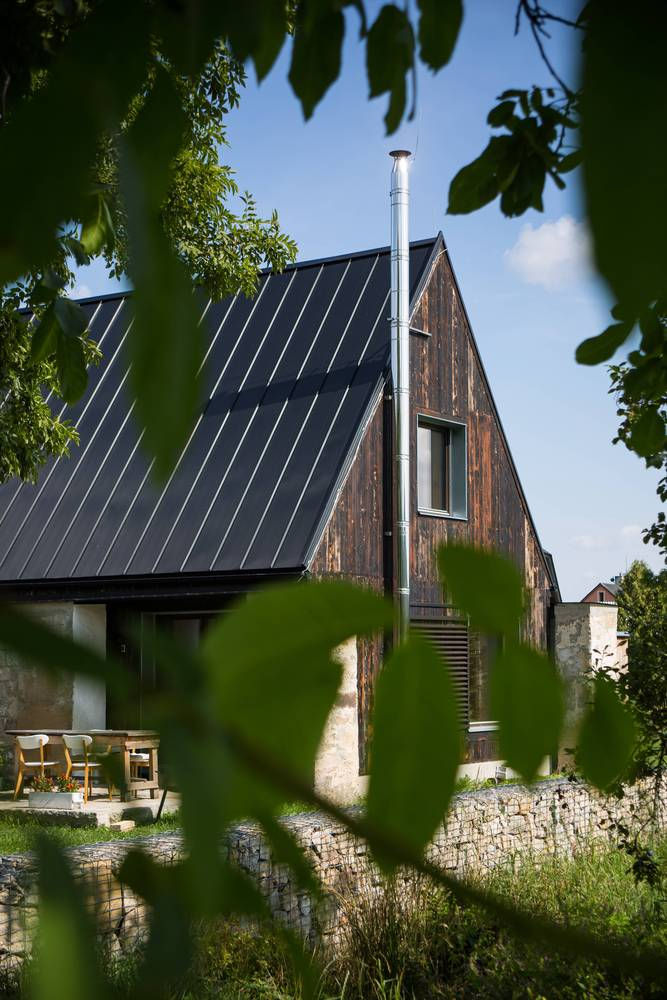
"Set against the rugged landscape of the Jizera Mountains in the Czech Republic, the Cottage Pod Bukovou by Mjölk architekti is a revitalization of an unfinished 1980s cabin. The project transformed the eccentric, derelict structure into an elegant and bold mountain retreat, consisting of a main cottage and a smaller annexed cabin that houses a sauna and a guest bedroom. The design draws on the atmosphere of the forest environment, where foggy, dreary weather can be ""the best"" for creating a cozy, contemporary interior. The most striking feature of the renovation is the exterior, where the original gray facade was completely replaced with vertical blackened timber paneling. The dark wood covers both the walls and the A-frame pitched roofs, giving both the main cottage and the sauna cabin a sculptural, abstract appearance where the roof, walls, and chimney merge into a single, unified shape. In contrast to the angular silhouette, some of the windows are cut into round shapes, evoking the feel of an oversized birdhouse. Inside the 85.5-square-meter main cottage, the layout was reorganized for greater efficiency while maintaining the original living space. The interior is simple and functional, with a cozy atmosphere created by the crackling fire in a large fireplace. The sleeping arrangements were changed to accommodate two bedrooms. A larger bedroom is accessed via a concealed staircase within a closet, while a second, smaller one is reached by a ladder from the kitchen. The architects also created a unique ""sleeping window,"" a deep, cushioned alcove opposite the fireplace where an unexpected guest can sleep comfortably. The interior warmth is complemented by the materials, with the black wood finish extending to the ceilings of the main room. The project includes a 21-square-meter annexed cabin with a sauna and a guest bedroom, providing a perfect spot to relax and enjoy the forest views. Project credits Architecture: Mjölk architekti Location: Jiřetín pod Bukovou, Czech Republic Completion: 2020 Builder: AronHouse Photography: BoysPlayNice "


Architects:


"House for Parents in Jeseniky is a family residence designed by TRI.ŠTRNÁST architekti and completed around 2021 in the Czech Republic. Situated near the Jeseníky Mountains, the project involved transforming a plot where a barn once stood. Instead of demolishing the original structure entirely, the architects salvaged the monumental granite walls, inserting a new timber construction between them to preserve the site's history. The new house is connected to a separate studio/garage via a central, multifunctional outdoor terrace. The design was created for an elderly couple who wished to move from a city apartment to a house with a garden. The primary living space is on the ground floor and is designed to accommodate the couple's future needs, featuring a no-threshold layout and a bathroom accessible to wheelchairs. This main floor includes an entry foyer, bathroom, utility room, living room with dining area and kitchen, and a bedroom. A staircase leads to an attic that serves as a bedroom for visiting family and provides storage for sports equipment for the nearby Ramzová ski area. The house emphasizes sustainability and low-energy performance. The KVH (solid constructional wood) lumber beam system was assembled with minimal fasteners and insulated with blown cellulose. For durability and aesthetic continuity with local architecture, the exterior is clad in charred spruce wood, an application of the shou sugi ban technique. The interior features perimeter walls lined with unfired bricks and finished with clay plaster, which helps regulate humidity and creates a comfortable indoor climate. Heating is provided by a solid fuel stove, with electric cables as a backup. The southern facade is complemented by a stone terrace shaded by a textile canopy, preventing the building from overheating. Credits Architects: TRI.ŠTRNÁST architekti Photography: Lukáš Ildža "

Architects:


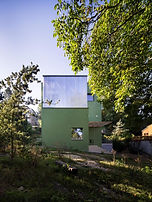

![Designed by Aoc architekti, the Green House is a 2023 residential villa project in the Prague Podolí district of the Czech Republic. The project involved the extensive transformation of a worn-out 60-year-old family house into a modern, high-standard residence. Located in the village of Dvorce on the edge of a residential area, the house enjoys scenic views of the Vltava River.
The architecture of the Green House is defined by a strong and refined atmosphere, with careful attention paid to the integration of interior details with the surrounding garden landscape. The design thoughtfully manipulates different types of light to enhance the living experience:
A sophisticated, distinctive, fine scraped green render facade allows the house to blend into the surrounding vegetation, its appearance subtly shifting with the seasons.
Semi-transparent facades and skylights offer soft, diffused light, while contrasting areas of twilight are also incorporated.
A monumental studio window on the main level changes the atmosphere of the space depending on the time of day.
The interior space is a blend of custom and existing furnishings, creating a comfortable and personalized
Custom-made built-in furniture conceals service functions and entrances to private areas.
Tables crafted from polished solid tropical padouk wood on a steel structure were designed specifically for the house.
The client's own older furniture is discreetly integrated into the new design.
The owners' personal photographs and paintings by contemporary artists hang on the walls.
Layout
The house is spread across multiple levels, each with a distinct purpose:
Lowest floor: Features a small studio apartment with its own terrace, providing privacy for guests.
Main living unit (upper two floors):
Lower floor: An open-plan kitchen, dining area, and living area with floor-to-ceiling windows opens onto a spacious terrace overlooking the garden.
Upper floor: A dedicated study and lounge area with a fireplace and large windows offers expansive views of the river. A private zone with a bedroom, dressing room, and blue bathroom is located behind the study.
Staircase: An oak-paneled wooden staircase connects the floors, contributing to the home's cozy, domestic atmosphere.
The house is situated within a naturally growing garden, with future plans to include exotic fruit trees, a water feature, and a vineyard.
Credits
Architects: Aoc architekti
Lead Architects: Ondřej Císler and Filip Rašek
Design Team: Josef Choc, Ján Vyšný, Barbora Lopraisová, Natálie Kristýnková, Emily Hillová, and Jonáš Mikšovský
Client: Eduard Kauba
Photography: Studio Flusser
Landscape Architect: Mikoláš Vavřín
Lighting Design: Miroslav Dudek [Lumidée]
Facade Color: Klara Kvizova
Creative Consultancy: Eduard Kauba
Manufacturers: Artemide, Bomma, Brokis, Viabizzuno](https://static.wixstatic.com/media/a0ba0f_2e119e3fa4b34e969c4e032408981138~mv2.jpg/v1/fill/w_800,h_1066,al_c,q_85,enc_auto/a0ba0f_2e119e3fa4b34e969c4e032408981138~mv2.jpg)
Designed by Aoc architekti, the Green House is a 2023 residential villa project in the Prague Podolí district of the Czech Republic. The project involved the extensive transformation of a worn-out 60-year-old family house into a modern, high-standard residence. Located in the village of Dvorce on the edge of a residential area, the house enjoys scenic views of the Vltava River. The architecture of the Green House is defined by a strong and refined atmosphere, with careful attention paid to the integration of interior details with the surrounding garden landscape. The design thoughtfully manipulates different types of light to enhance the living experience: A sophisticated, distinctive, fine scraped green render facade allows the house to blend into the surrounding vegetation, its appearance subtly shifting with the seasons. Semi-transparent facades and skylights offer soft, diffused light, while contrasting areas of twilight are also incorporated. A monumental studio window on the main level changes the atmosphere of the space depending on the time of day. The interior space is a blend of custom and existing furnishings, creating a comfortable and personalized Custom-made built-in furniture conceals service functions and entrances to private areas. Tables crafted from polished solid tropical padouk wood on a steel structure were designed specifically for the house. The client's own older furniture is discreetly integrated into the new design. The owners' personal photographs and paintings by contemporary artists hang on the walls. Layout The house is spread across multiple levels, each with a distinct purpose: Lowest floor: Features a small studio apartment with its own terrace, providing privacy for guests. Main living unit (upper two floors): Lower floor: An open-plan kitchen, dining area, and living area with floor-to-ceiling windows opens onto a spacious terrace overlooking the garden. Upper floor: A dedicated study and lounge area with a fireplace and large windows offers expansive views of the river. A private zone with a bedroom, dressing room, and blue bathroom is located behind the study. Staircase: An oak-paneled wooden staircase connects the floors, contributing to the home's cozy, domestic atmosphere. The house is situated within a naturally growing garden, with future plans to include exotic fruit trees, a water feature, and a vineyard. Credits Architects: Aoc architekti Lead Architects: Ondřej Císler and Filip Rašek Design Team: Josef Choc, Ján Vyšný, Barbora Lopraisová, Natálie Kristýnková, Emily Hillová, and Jonáš Mikšovský Client: Eduard Kauba Photography: Studio Flusser Landscape Architect: Mikoláš Vavřín Lighting Design: Miroslav Dudek [Lumidée] Facade Color: Klara Kvizova Creative Consultancy: Eduard Kauba Manufacturers: Artemide, Bomma, Brokis, Viabizzuno

Architects:


The Cottage in Klínec is a wooden retreat designed by Czech architectural firm Archicraft. Completed in 2022, the project involved demolishing an existing cottage and designing a new wooden-framed structure in the same location, adhering to local regulations that required the new building to maintain the original footprint. The result is a simple and elegant cottage that provides its owners with a peaceful escape from city life. The design focuses on low-maintenance upkeep and seamless integration with the surrounding nature. Exterior: The dark color of the exterior helps the cottage blend into its forest surroundings. Wooden cladding was strategically used in shaded areas and as underlayment, while a gutterless roof was chosen to minimize maintenance. Interior: The cottage's interior is designed for comfort and relaxation, with a warm and cozy atmosphere. The layout is optimized for the owners' specific needs, which included spaces for a painting easel and a small desk. The living room features a kitchen, a sofa, and a fireplace. The sofa is positioned to offer a view of both the fireplace and a television. All bathrooms are equipped with windows for natural ventilation and light. Project details Location: Klínec, Czech Republic Year of completion: 2022 Architect: Archicraft Building constraints: The replacement structure was required to maintain the original building's footprint, including one above-ground floor and a residential attic. Additional sheds and verandas could be added, but not exceeding 10% of the existing built-up area and not facing the forest. Client: Private Investor


Architects:


Zilvar House is a modern, energy-efficient wooden retreat designed by the Prague-based studio ASGK Design for a family seeking escape from urban life. Located on the outskirts of a village in Eastern Bohemia, Czech Republic, the compact and open-plan house is surrounded by fields, meadows, and forests. The house's unique and organic design was inspired by the client's four-year-old son, who imagined a building with an anthropomorphic shape that leaned towards the impressive oak tree on the property. Taking cues from this imaginative vision and the local microclimate, ASGK Design created a house that constantly interacts with its natural surroundings. Completed in 2013, the house has a larch timber-framed structure and is built on a pile foundation, raising it slightly off the ground. The elongated, single-story form features a pent roof that angles toward the oak tree. The facade, interior, and roof are clad in larch boards. To increase durability against the region's strong winds and rain, the exterior wood underwent a "burn and stain" process. The interior features lighter, natural wood finishes. Designed as a low-energy house, Zilvar utilizes a "diffusion-open" wall assembly that allows moisture to pass through the structure, eliminating the need for a plastic vapor barrier. A wood-burning stove and radiant floor heating provide warmth. Large, floor-to-ceiling windows and sliding glass doors blur the line between the indoors and outdoors, creating the illusion of a larger space. Same wooden flooring is used both inside and on the eastern terrace, creating a seamless connection to the garden. Large sliding wooden shutters provide shade from the summer sun while allowing winter solar gain. Sheltered outdoor areas are strategically placed at the northern entrance and eastern terrace to provide protection from the elements year-round. The ground floor contains an open-plan living area with a kitchenette and dining space. Two raised galleries at opposite ends of the house, accessed by industrial-style staircases, serve as bedrooms. Project credits Architect: ASGK Design Photographer: Petra Hajská Location: Lodín, Czech Republic Project name: House Zilvar


Architects:


Hut-Inspired House is a residential project in Říčany, Czech Republic, designed by Prague-based Atelier Hajný. Completed in 2023, the family home was built on the site of a holiday cabin that the client had frequented since childhood. As the surrounding area began to change with new zoning plans favoring family houses, the original, beloved hut was destined for demolition. To honor the client's nostalgic connection to the site, Atelier Hajný designed a new, modern home that subtly referenced the shape and appearance of the old cabins. The design for the 180-square-meter home successfully balances the sentimental and the contemporary. The house's elongated, gabled form, with its prominent roof and overhangs, reflects the familiar shape of the traditional huts once common in the area. The building appears as a single-family dwelling, but it is cleverly designed to contain two standalone studio apartments on the ground floor, in addition to the main two-story home. The exterior is clad in charred timber, a durable and natural material that gives the house a rustic yet modern aesthetic. Light wooden shading slats on the gable ends add visual interest and regulate sunlight. Integration with nature: A cantilevered balcony provides a sheltered outdoor space, while the design's overall form harmonizes with the changing character of the landscape. The 180-square-meter interior is designed to be warm, functional, and filled with natural light. Exposed cross-laminated timber (CLT) panels provide a warm, natural contrast to the darker facade. The ground floor contains the entrances to the two studio apartments, a technical area, and the main living room with an integrated kitchen. The upper floor is dedicated to the main apartment's private quarters, including bedrooms, a study, and a bathroom. Custom built-in furniture, including cabinetry made from oak and birch veneer, helps to optimize space and maintain a clean, uncluttered look. The Hut-Inspired House was designed with energy efficiency and modern comfort in mind. Features include: Electric underfloor heating. Recuperative air conditioning. Materials chosen for durability and sustainability, such as charred wood and CLT panels. Project credits Architecture Firm: Atelier Hajný Principal Architect: Martin Hajný Design Team: Alex Yeloyeva Location: Říčany, Czech Republic Photography: Radek Úlehla Completion Year: 2023 Collaborators: 3AE (project documentation and construction)


Architects:
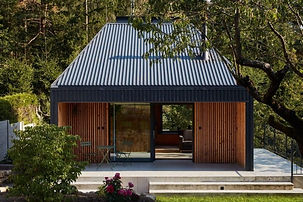

Skylight Hut is a renovated countryside retreat located in a recreational area in the Sázava River region, near Prague in the Czech Republic. Designed by Atelier Hajný and completed in 2024, the project transformed a derelict, 1970s single-story hut into a contemporary and airy two-story home. The clients, a couple from Prague, wanted a tranquil escape for weekends and remote work, but faced challenges from strict local zoning regulations. Atelier Hajný's design solution addressed the need for more space while adhering to a maximum height limit of 7.7 meters. The most distinctive feature is the truncated, asymmetrical hip roof, topped with a pair of skylights. This design minimized the building's overall height and prevented it from blocking the views of neighboring properties. The architects kept the original 1970s stone base, stripping the building to its foundation. A new, modern metal structure was then built upon this base, supported by a concrete slab and concealed pillars. The trapezoidal metal sheeting that clads the roof and façade gives the home a modern look while offering durability and minimal upkeep. The dark color helps the structure blend with the natural surroundings. The skylights not only provide natural light but also enable chimney ventilation, which, combined with a significant roof overhang, helps regulate the indoor climate throughout the year. Inside the 46-square-meter cabin, the design maximizes space and light to create a cozy and warm atmosphere. The interior is defined by an extensive use of light pine plywood with a prominent grain, which covers the walls, ceilings, and custom furniture. This contrasts with the dark, minimalist exterior, creating a brighter indoor environment. he ground floor features an open-plan layout connecting the living, dining, and kitchen areas. Large windows on the south and east sides provide dynamic views and flood the space with natural light. An attic bedroom is nestled under the asymmetrical roof, illuminated by the innovative skylight system. A small fireplace adds extra warmth and coziness to the main living area. The bathroom has a simple and modern aesthetic, with a gray plaster finish. Project credits Architecture: Atelier Hajný Lead Architect: Martin Hajný Location: Sázava River Area, Czech Republic Completion Year: 2024 Photography: Radek Úlehla Manufacturers: Lindab, Velux


Architects:


