

Portugal
The rank indicates the popularity of a country among users. By clicking on the 'Appreciate' button, you can contribute to elevating a country's rank. Each 'Appreciate' click adds to the country's rank, so feel free to express your appreciation by boosting countries with content that resonates with you.
...
Rank
...
Views
5
Please login to appreciate


Architects:
Area:
3,000 m2
Year:
2016
City:
Lisbon
Client:


No Buildings yet.










.png)


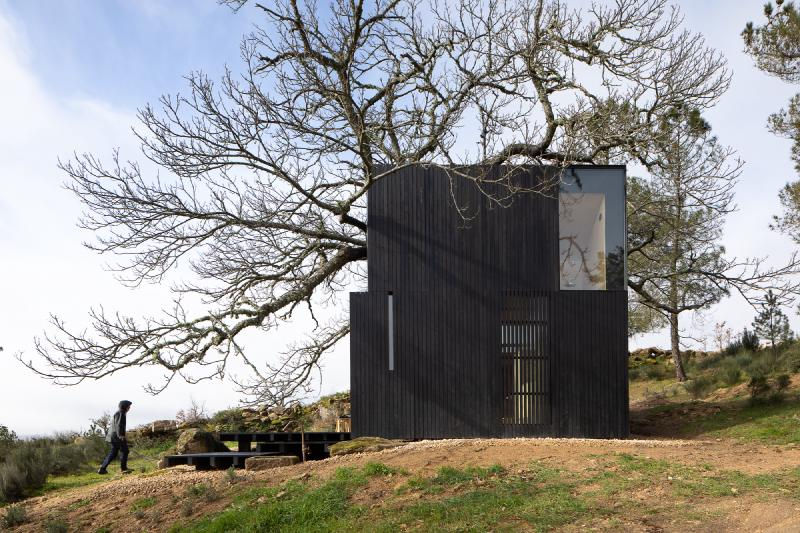
Designed by Portuguese architect João Mendes Ribeiro, Chestnut House is a minimalist retreat located in the rural landscape of Valeflor, in northern Portugal. Completed in 2020, the compact, 25-square-meter cabin was constructed around a large, century-old chestnut tree, which served as the central inspiration for the project. To accommodate the tree, the cabin's geometry was modified and one side was angled inward, with large windows framing the tree's trunk and canopy. This unique design allows the building to exist in symbiosis with nature, with the house's life, textures, and colors reflecting the changes in seasons and weather. The project's philosophy was to create a "shelter" that was as unintrusive as possible, molding itself to the natural landscape rather than impacting it. The house is built on an elevated modular structure to avoid disturbing the tree's roots. The entire structure was built with certified pine wood, coated both inside and out with oriented strand boards (OSB). For insulation, layers of corkboard were applied, a sustainable material with a negative carbon footprint. The exterior is clad in thermo-modified wood and painted black to blend with the surroundings, while the interior features birch plywood on the walls, ceiling, and built-in furniture. The interior of the Chestnut House is a single, open-plan space, accommodating a living area, kitchen, and sleeping space, along with a small mezzanine for an extra bed. Full-height windows connect the interior with the surrounding woodland, and a wooden deck and a fireplace further blur the line between indoor and outdoor living. Credits Architect: João Mendes Ribeiro Project collaboration: Ana Maria Feijão, João Fôja, Catarina Fortuna, Dominika Van Eenbergen, Filipe Catarino, Joana Brandão, Pedro Teixeira Engineer and lighting design: Raul Serafim & Associados Photography: José Campos


Architects:


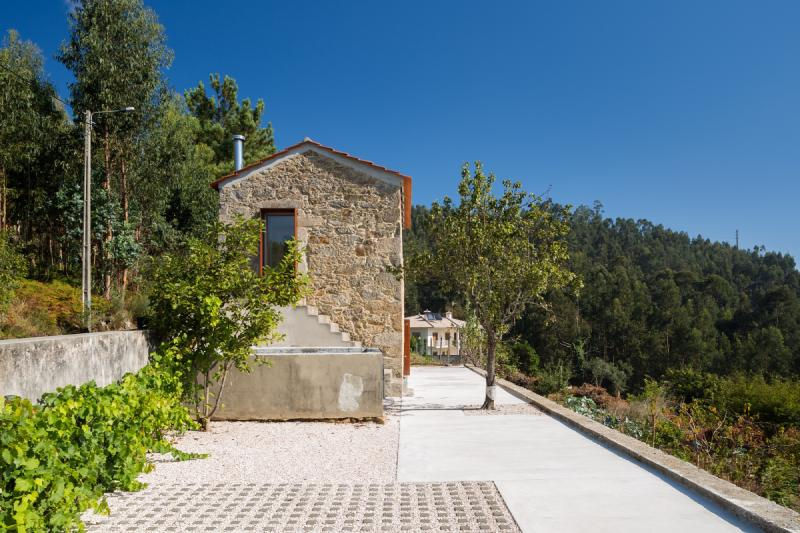
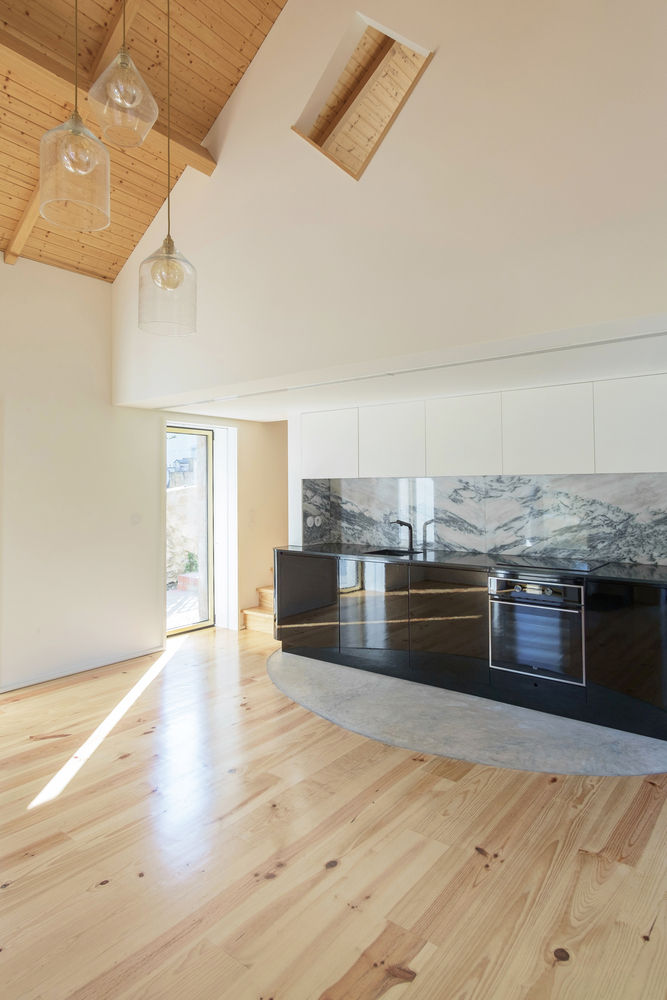
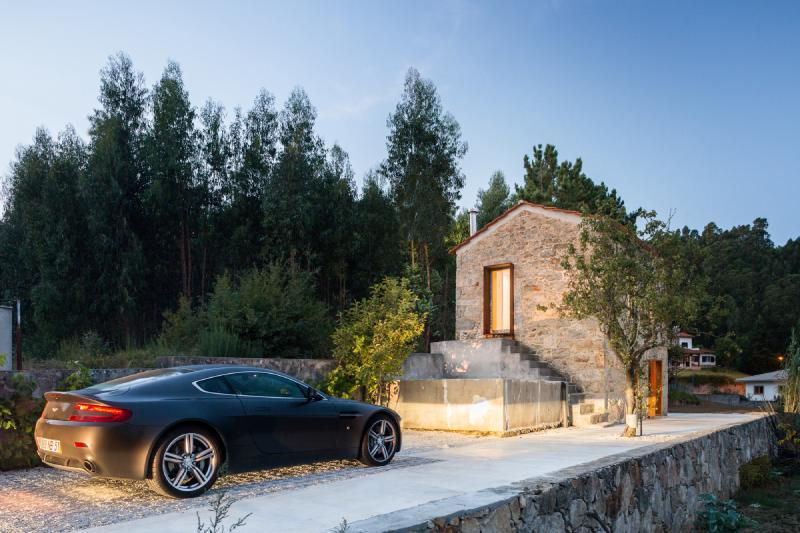
"Designed by Paulo Martins ARQ&DESIGN, the SH House is a compact, two-story weekend retreat located in Sever do Vouga, Portugal. Completed in 2016, the project involved the renovation of an existing stone house, which was originally built in a pastoral countryside setting. The architect's key intervention was the integration of contemporary minimalist design elements while preserving the structure's historical stone walls. The house has a total floor area of 45 square meters. On the ground floor, the social areas—a small kitchen, dining area, and living space—enjoy a direct connection with the surrounding outdoor areas. A weathering steel (corten) staircase, which also incorporates storage, divides the two floors and adds a striking modern contrast to the old stone walls. The upstairs contains a bedroom and bathroom, offering privacy and scenic views of the landscape. Throughout the interior, a minimalist aesthetic and light colors are used to create a sense of spaciousness and openness, maximizing the perception of the compact volume. Project credits Architecture: Paulo Martins ARQ&DESIGN Photography: Ivo Tavares Studio"


Architects:


"Situated behind a modernist apartment building in Porto, Portugal, the renovation of Casa Zaire by Paulo Moreira Architectures was a compact and thoughtful project. Completed in 2018, the residence was originally the caretaker's house for the main building and is tucked away from the street and urban life. The renovation reconfigured the tiny, 30-square-meter space to create a contemporary living area that prioritizes the internal connections between rooms and a sense of openness within the compact volume. Inspired by the isolated location, the architects treated the small building as an autonomous object. On the ground floor, the kitchen, a side balcony, and the stairs were strategically moved to the outer walls, which freed up the central space for a small dining area. Upstairs, the bedroom was elevated on a custom-designed platform, creating valuable storage space underneath. This clever use of vertical space helps to maximize the cabin's limited footprint. The interior palette is a creative mix of old and new materials. The architects chose to keep the original black-and-white tiled flooring on the ground floor despite its worn look, lending character and a sense of history. This is contrasted with modern interventions, such as powder-blue kitchen cabinets and white subway tiles in a herringbone pattern. Other material choices, like wood countertops and simple wooden stair treads, further enhance the feeling of warmth and comfort. Project credits Architecture: Paulo Moreira Architectures Photography: Ivo Tavares Studio Builder: Obrik"


Architects: