


Facts:

Description:
the Architects
Text description by
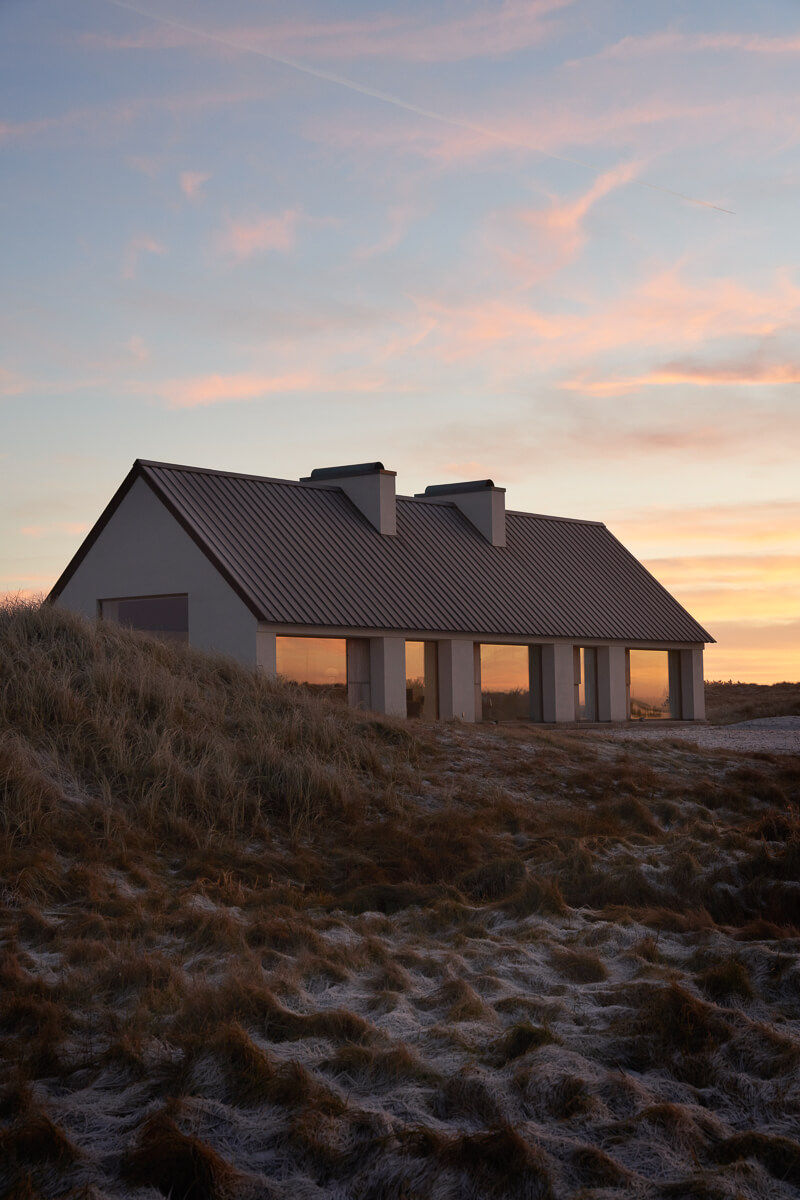
Vipp Cold Hawaii is a contemporary guesthouse in Thy National Park, Denmark, designed by the local architect studio Hahn Lavsen. The project, which opened in 2024, involved transforming a historic early 1900s fisherman's cottage on a secluded 9,900-square-meter plot into a bookable retreat for surfers and nature lovers. While its silhouette hints at the traditional cottages of the area, the new structure features minimalist geometric forms and a restrained material palette.
To create a robust yet understated structure that could withstand the coastal elements, Hahn Lavsen chose to work with a palette of just five materials, processed as little as possible. These include whitewashed aerated concrete walls for insulation, a roof of untreated Douglas fir heartwood designed to age gracefully, and classic oak stable doors that allow for natural ventilation and echo the area's agricultural past. Inside, the floors are exposed brick laid in sand, a textural reference to the nearby sandy beaches.
The 185-square-meter guesthouse features a spacious, open-plan living, dining, and kitchen area, along with three double bedrooms and two bathrooms. Inside, the interior design by Julie Cloos Mølsgaard complements the minimalist architecture with a calm, neutral color palette and furnishings from Vipp. The heart of the home is a Vipp V3 kitchen, and large windows throughout frame expansive, panoramic views of the national park and the North Sea.
Credits
Architecture: Hahn Lavsen
Interior Design: Julie Cloos Mølsgaard
Manufacturer/Client: Vipp
Photography: Pia Winther
Artwork: Frederik Næblerød, Rasmus Søndergaard Johannsen, and Bente Boesen
Textile Curtain: Benthe Boesen
Team

In This Project:

Presentation / Gallery:
.



Plans & 2Ds:
Materials Used:
More Projects by
Hahn Lavsen
About
Hahn Lavsen:
Hahn Lavsen is an architecture studio founded in 2019 by the Swedish-Danish couple Caroline Hahn and Ebbe Lavsen, based in North Jutland, Denmark. The firm specializes in restoration and transformation projects, combining a deep understanding of traditional materials and building techniques with modern architectural approaches. Their designs often focus on creating a dialogue between sharp, contemporary geometry and the surrounding natural or historical context, as seen in the Vipp Cold Hawaii guesthouse project.
