

Spain
The rank indicates the popularity of a country among users. By clicking on the 'Appreciate' button, you can contribute to elevating a country's rank. Each 'Appreciate' click adds to the country's rank, so feel free to express your appreciation by boosting countries with content that resonates with you.
0
Rank
...
Views
0
Please login to appreciate


No Architecture Offices yet.

1998
Since
Architecture Office


0
Views
...
0
Project

2013
Since
Architecture Office

"Designed by NUA Arquitectures in 2020, Mas Nil is a residential project located in the region of Tarragona, Spain. The house is defined by its triangular shape, a deliberate design choice that was determined by the specific conditions of the terrain, including its boundaries and solar orientation. This approach allows the building to seamlessly integrate into its natural surroundings, emphasizing a deep and harmonious relationship between the built environment and the landscape. The architectural concept for Mas Nil utilizes materials and forms that directly reflect the local context, giving it a strong connection to the region's heritage while maintaining a contemporary feel. Project credits Architects: NUA Arquitectures Location: Tarragona, Spain Photography: José Hevia Completion: 2020 "


0
Views
...
0
Project

2011
Since
Architecture Office

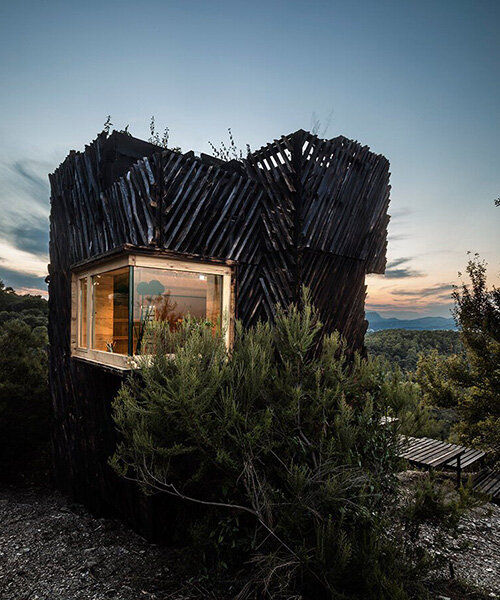
"The Voxel Quarantine Cabin, located in Collserola natural park near Barcelona, Spain, is a 12-square-meter off-grid prototype designed and built in 2020 by students and researchers from IAAC's MAEBB program. The Voxel is a self-sufficient cabin for one person to quarantine for 14 days. It embodies a ""circular metabolism"" by using locally sourced and processed natural materials with industrialized techniques to promote sustainable green building. All timber for the project came from Aleppo Pine trees harvested locally according to a sustainable forestry plan. This timber was milled, dried, processed, and pressed on-site into cross-laminated timber (CLT) panels for the structure. The 3.6 x 3.6-meter cube is assembled using metal-free lap joints and wooden dowels instead of metal fixings. The interior features exposed CLT, with the same wood used for custom furniture like a platform bed and desk. The exterior is insulated with cork and covered with a unique rainscreen made from offcuts of the CLT production. These charred wood slats, treated with the shou sugi ban technique for weatherproofing, are arranged in a gradient, highlighting the natural shape of the tree. Some sections of the façade are extended to house utilities like water tanks and an outdoor shower. The cabin is self-sufficient with a water-energy-waste system that includes solar panels and battery storage, rainwater harvesting and greywater recycling, and a biogas system for blackwater treatment to produce fuel and fertilizer. The roof also incorporates computer-designed garden boxes for local plants that help filter rainwater. photography by José Hevia."


0
Views
...
0
Project

No Brands yet.
Catalogs
Waterproofing & insulation solutions
Danosa
Polígono Industrial Mollet II - Camino Mollet, 68, 08100 Mollet del Vallès, Barcelona, Spain
Since
1964

.png)


Catalogs
Lighting and Furniture
Santa & Cole
Montseny, 3, 08173 Sant Cugat del Vallès, Barcelona, Spain
Since
1985

No Projects yet.
No Projects yet.


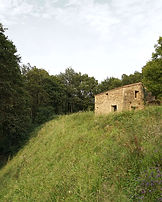

Casa Mínima is a passive house nestled in the serene hills of Cantabria. Located in the heart of the Pasiegos Valleys, this project emerged from the ruins of an old cabin, embodying a vision of conscious and honest construction. The restoration of Casa Mínima was approached with respect and precision, adhering to the Passivhaus standard while utilizing natural materials such as lime, stone, and wood. Each design decision was made with careful consideration, allowing light to permeate the space while maintaining its rural essence. Recycled beams were repurposed as furniture, demonstrating an architectural philosophy that prioritizes harmony over imposition. Casa Mínima embodies the principles of passive design while ensuring comfort and functionality. It features high-performance thermal insulation, mechanical ventilation with heat recovery, and a sealed wood stove, all contributing to a healthy and balanced indoor environment. Designed to accommodate up to six guests, the layout includes two bedrooms with king-size beds, two full bathrooms, a living-dining area, an integrated kitchen, and an exterior patio. The interior features an open day area that seamlessly integrates the kitchen, dining room, and living room. Expansive windows frame picturesque views, dissolving the boundaries between indoor and outdoor spaces. Natural light transforms the ambiance throughout the day, creating a dynamic and inviting atmosphere. The two bedrooms serve as restful retreats, designed with simplicity and noble materials to foster serenity. Carefully framed views enhance the tranquil environment, while the bathrooms echo the home's essential aesthetic with mineral finishes and soft textures, turning daily rituals into sensory experiences. An extensive patio extends the livable space outdoors, paved with reclaimed stone slabs, it serves as a threshold between the home and the surrounding countryside—a perfect setting for contemplation and conversation. Project credits Architects: Estudio Mínima Photography: Biderbost Photo


Architects:

"Designed by NUA Arquitectures in 2020, Mas Nil is a residential project located in the region of Tarragona, Spain. The house is defined by its triangular shape, a deliberate design choice that was determined by the specific conditions of the terrain, including its boundaries and solar orientation. This approach allows the building to seamlessly integrate into its natural surroundings, emphasizing a deep and harmonious relationship between the built environment and the landscape. The architectural concept for Mas Nil utilizes materials and forms that directly reflect the local context, giving it a strong connection to the region's heritage while maintaining a contemporary feel. Project credits Architects: NUA Arquitectures Location: Tarragona, Spain Photography: José Hevia Completion: 2020 "
Architects:

"The Voxel Quarantine Cabin, located in Collserola natural park near Barcelona, Spain, is a 12-square-meter off-grid prototype designed and built in 2020 by students and researchers from IAAC's MAEBB program. The Voxel is a self-sufficient cabin for one person to quarantine for 14 days. It embodies a ""circular metabolism"" by using locally sourced and processed natural materials with industrialized techniques to promote sustainable green building. All timber for the project came from Aleppo Pine trees harvested locally according to a sustainable forestry plan. This timber was milled, dried, processed, and pressed on-site into cross-laminated timber (CLT) panels for the structure. The 3.6 x 3.6-meter cube is assembled using metal-free lap joints and wooden dowels instead of metal fixings. The interior features exposed CLT, with the same wood used for custom furniture like a platform bed and desk. The exterior is insulated with cork and covered with a unique rainscreen made from offcuts of the CLT production. These charred wood slats, treated with the shou sugi ban technique for weatherproofing, are arranged in a gradient, highlighting the natural shape of the tree. Some sections of the façade are extended to house utilities like water tanks and an outdoor shower. The cabin is self-sufficient with a water-energy-waste system that includes solar panels and battery storage, rainwater harvesting and greywater recycling, and a biogas system for blackwater treatment to produce fuel and fertilizer. The roof also incorporates computer-designed garden boxes for local plants that help filter rainwater. photography by José Hevia."
Architects:


