

Iceland
The rank indicates the popularity of a country among users. By clicking on the 'Appreciate' button, you can contribute to elevating a country's rank. Each 'Appreciate' click adds to the country's rank, so feel free to express your appreciation by boosting countries with content that resonates with you.
...
Rank
...
Views
0
Please login to appreciate
No Buildings yet.





"The Atelier Nyp is a sustainable artist's studio and guesthouse designed by Studio Bua on the site of a former sheep shed in remote western Iceland. Completed in 2023, the cabin was built on the repurposed concrete foundation of the original structure, which had been destroyed by extreme weather. This approach minimized the project's environmental impact and maximized existing resources, both material and cultural. Located in Skarðsströnd, the cabin is part of a broader development by Studio Bua of former farm buildings into a home, cultural spaces, and additional guesthouses. The project is named after the Nypurhyrna mountain that rises up from behind it. The cabin features a deliberately simple, jet-black corrugated steel exterior that references the local vernacular and protects against the harsh Icelandic weather. Its off-center pitched roof echoes the distinctive shape of one of the area's dominant mountain peaks. The interior features exposed cross-laminated timber (CLT) walls, which create a warm and cozy atmosphere. The space is divided into two independent units: a workspace with living quarters for the artist and her husband, and a self-contained mini-apartment for guests. Salvaged materials were incorporated throughout the project, including a staircase from a historic Reykjavík building and kitchen units from a 1950s apartment. Credits Architect: Studio Bua Architects: Sigrún Sumarliðadóttir (co-founder, Studio Bua) Client: Þóra Sigurðardóttir and Sumarliði R. Structural Engineer: Gísli Guðmundsson Contractor: Eiríkur Kristjánsson Photographer: Studio Bua Manufacturers: Cross-Laminated Timber (CLT), concrete, and corrugated steel"
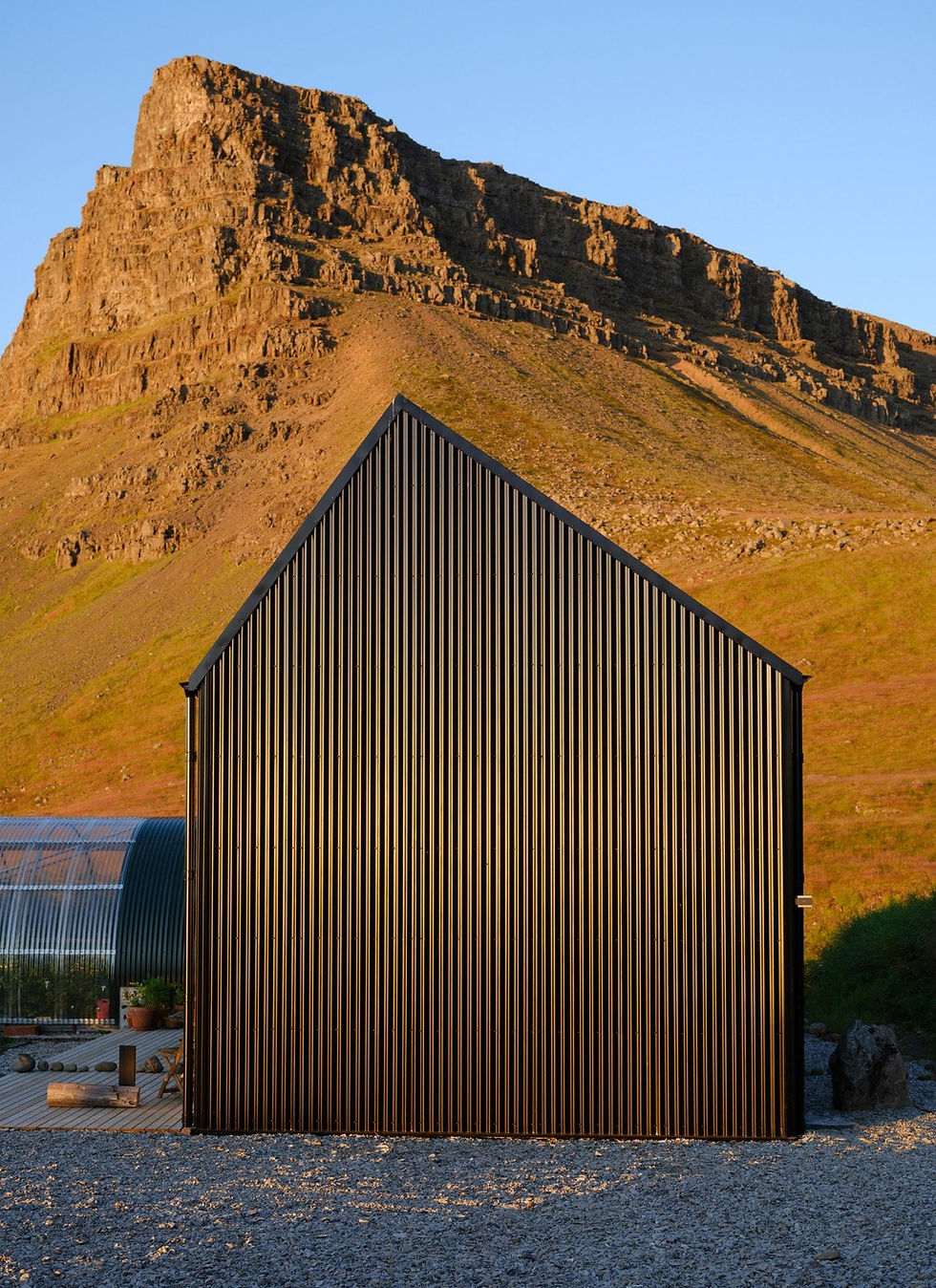

Architects:


"The Garður Landhouse is a contemporary turf house located on the east bank of the Ytri Rangá river in Iceland, completed in 2014 by Studio Granda. The 68-square-meter home is a modern interpretation of the traditional Icelandic turf house, designed to blend into the landscape by appearing as a continuation of the earth mounds surrounding it. The roof is covered with wild grass and heather, with rainwater channeled through open copper fittings between the northern gables. The house is partially embedded within the grassy landscape, with walls that are either earth-covered or composed of large, glazed sections that provide panoramic views of the surroundings. This design allows for a strong connection to the spectacular landscape, creating the sense of a hidden retreat. The external walls are of the same in-situ concrete as the interior, with some areas featuring columnar basalt masonry. The interior boasts a simple and minimalist aesthetic, with concrete floors and large windows that connect the living spaces to the expansive outdoors. Credits Architects: Studio Granda Photography: Rui Ferreira"


Architects: