

Chile
The rank indicates the popularity of a country among users. By clicking on the 'Appreciate' button, you can contribute to elevating a country's rank. Each 'Appreciate' click adds to the country's rank, so feel free to express your appreciation by boosting countries with content that resonates with you.
0
Rank
...
Views
0
Please login to appreciate
No Buildings yet.
No Architecture Offices yet.

1991
Since
Architecture Office

In 2022, Cazú Zegers Arquitectura introduced a sustainable, modular housing project in the commune of Lo Barnechea, Santiago, Chile, known as "Tiny House". This initiative, part of a larger plan for a small neighborhood called Pueblo La Dehesa, challenges traditional urban design by creating a system of prefabricated wooden homes that prioritize community, warmth, and a strong connection to nature. The project was inspired by "botanical shyness," a natural phenomenon where some tree canopies avoid touching, allowing each species to receive sunlight. This concept was applied to the master plan of Pueblo La Dehesa, organizing the houses and communal spaces in an organic, village-like cluster that fosters interaction and preserves open green areas. The design intentionally moves away from traditional, dense urbanization to promote a pedestrian-friendly environment immersed in a park-like setting. The project features three main types of prefabricated homes, each designed to maximize space and natural light: Type A: A 24.5 m² unit with one bedroom and one bathroom. Type B: A 49 m² or 69.02 m² unit with two bedrooms and one bathroom. Type C: A 63 m² unit with two bedrooms and two bathrooms. A focus on warm, natural, and sustainable materials defines the aesthetics of the Tiny House modules. The homes are primarily constructed from clear pine wood, giving them a cozy and natural feel. Architectural solutions were integrated to enhance the sense of spaciousness, such as invisible, frameless doors, large windows, and open layouts. A standout feature is the sculptural steel staircase, which is inspired by Japanese origami and contributes to the home's refined aesthetic. Built-in furniture, such as kitchen and bathroom components, was provided by manufacturers like Bontempo and MK. Project credits Architect: Cazú Zegers. Team of architects: Francisca Pereira, Francesca Fazzalari, Isabella Massa, Alejandra Sepúlveda, Carolina Wenzel, Claudia Fuentes, and Dominga Natho Anwandter. Interior design: Zegers Y Figueroa. Structural engineer: Cristián Sepúlveda. Main construction and modular units: RCM. Photography: Marcos Zegers. Furniture: Bontempo. Kitchen and bath artifacts: MK.


0
Views
...
0
Project

2009
Since
Architecture Office

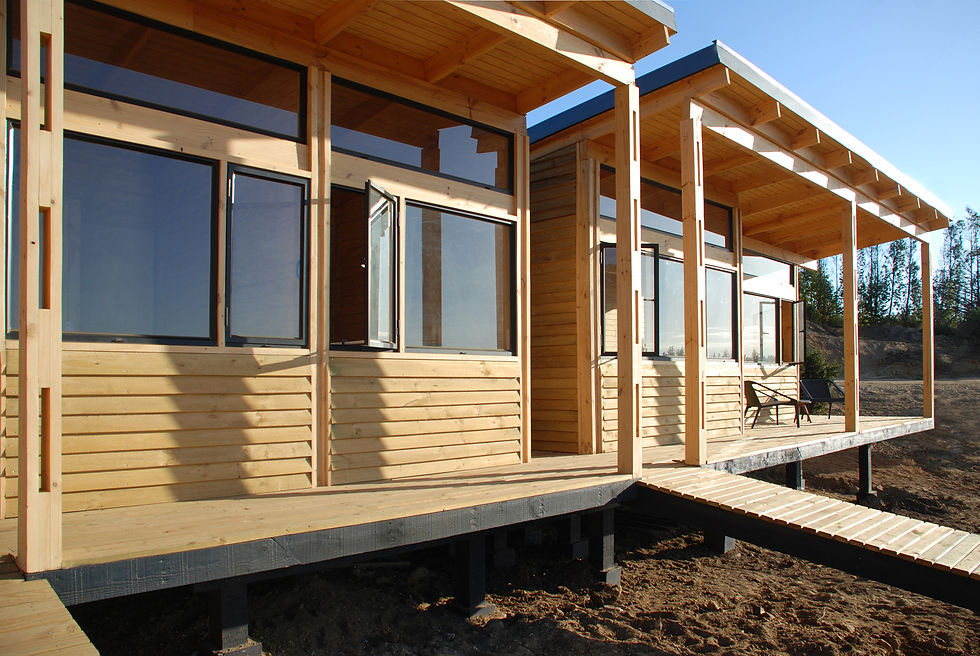
Rural House #01 by Cristobal Vial Arquitectos is a 60-square-meter holiday home completed in 2020 near Matanzas, Chile. The modest, modular, and solar-powered structure is positioned on a hilly, forested terrain to capture distant views of the Pacific Ocean and optimize passive solar gains. The house is organized into three separate volumes connected by a central circulation space. This longitudinal layout follows the slope of the site, with "cuts" between the volumes allowing for north-south sightlines across the property. The three modules accommodate distinct programmatic functions: Public area: Contains the open-plan living room, kitchen, and dining area. Children's private area: Houses the children's bedrooms. Adults' private area: Contains the master bedroom. A west-facing terrace runs along the length of the house, providing a direct connection to the outdoors from all three modules. A broken gable roof structure envelops the three volumes, creating a unified form that dialogues with the existing terrain. The entire structure is made of dimensioned wood, with composite pillars, beams, and trusses left exposed to serve as the building's final expression. Partitions are constructed from Structural Insulated Panels (SIPs), which offer high thermal performance. The exterior is clad in a rough horizontal shed siding. The walls and ceilings are finished with slotted plywood. The butterfly roof is equipped with photovoltaic panels, which supply all the electrical needs for the house. Elevated foundations minimize disturbance to the natural ground. The home's orientation and modular layout are designed to maximize sunlight and ventilation throughout the year. Project team and credits Architects: Cristobal Vial Arquitectos Lead Architect: Cristobal Vial Decombe Collaborators: Pablo Solís Structural Engineer: Soledad Torres Electrical & MEP: Dinamo Consultores Ltda Photovoltaic Installation: Joaquín Acuña Contractor: Punta Rural Photographs: Cristóbal Vial Decombe


0
Views
...
0
Project

2010
Since
Architecture Office

Located in Matanzas, Chile, the cabins La Loica and La Tagua were designed by Croxatto y Opazo Arquitectos as minimalist holiday homes that blend with the surrounding coastal environment. The project is defined by its strategic position on a steep, wind-swept hill, offering expansive views of the Pacific Ocean. The project's design focused on creating small-footprint volumes that respect the natural landscape while maximizing coastal views. Named after native bird species—La Loica and La Tagua—the cabins use vertically stacked rooms to create a lookout-tower effect. The cabins are situated on Lagunilla hill in Matanzas, Navidad, approximately 80 meters above sea level and 2.5 hours from Santiago. From this vantage point, they overlook the "Lobera," a large rock formation in the The cabins are built entirely of wood, using a timber pylon structure to support the main platform on the steep terrain. The exterior cladding is made from reclaimed oak sleepers treated with petroleum oils to protect against marine corrosion. Interiors feature a limited palette of light-colored wood, creating a warm, simple, and spacious atmosphere. The living area, kitchen, and bathroom are located on the main floor, with a ladder leading to the bedroom in the loft. Large, west-facing windows enhance the feeling of hovering over the ocean and dominate the horizon. North-facing terraces extend the interior spaces and are positioned to provide a shield against the region's strong southwest winds. To combat the small footprint (La Loica at 20 m² and La Tagua at 25 m²), the double-height living room creates a perception of more expansive space. The project initially operated off-grid, requiring the use of a water tank and electric generator for the construction process. The cabins were designed for two different clients, and the firm’s main goal was to connect the inhabitants with nature. Project credits Architects: Croxatto y Opazo Arquitectos. Lead Architects: Nicolás Opazo Marchetti and Felipe Croxatto Viviani. Photography: Cristóbal Palma / Estudio Palma.


0
Views
...
0
Project

No Brands yet.
No Projects yet.
No Projects yet.
No Projects yet.

In 2022, Cazú Zegers Arquitectura introduced a sustainable, modular housing project in the commune of Lo Barnechea, Santiago, Chile, known as "Tiny House". This initiative, part of a larger plan for a small neighborhood called Pueblo La Dehesa, challenges traditional urban design by creating a system of prefabricated wooden homes that prioritize community, warmth, and a strong connection to nature. The project was inspired by "botanical shyness," a natural phenomenon where some tree canopies avoid touching, allowing each species to receive sunlight. This concept was applied to the master plan of Pueblo La Dehesa, organizing the houses and communal spaces in an organic, village-like cluster that fosters interaction and preserves open green areas. The design intentionally moves away from traditional, dense urbanization to promote a pedestrian-friendly environment immersed in a park-like setting. The project features three main types of prefabricated homes, each designed to maximize space and natural light: Type A: A 24.5 m² unit with one bedroom and one bathroom. Type B: A 49 m² or 69.02 m² unit with two bedrooms and one bathroom. Type C: A 63 m² unit with two bedrooms and two bathrooms. A focus on warm, natural, and sustainable materials defines the aesthetics of the Tiny House modules. The homes are primarily constructed from clear pine wood, giving them a cozy and natural feel. Architectural solutions were integrated to enhance the sense of spaciousness, such as invisible, frameless doors, large windows, and open layouts. A standout feature is the sculptural steel staircase, which is inspired by Japanese origami and contributes to the home's refined aesthetic. Built-in furniture, such as kitchen and bathroom components, was provided by manufacturers like Bontempo and MK. Project credits Architect: Cazú Zegers. Team of architects: Francisca Pereira, Francesca Fazzalari, Isabella Massa, Alejandra Sepúlveda, Carolina Wenzel, Claudia Fuentes, and Dominga Natho Anwandter. Interior design: Zegers Y Figueroa. Structural engineer: Cristián Sepúlveda. Main construction and modular units: RCM. Photography: Marcos Zegers. Furniture: Bontempo. Kitchen and bath artifacts: MK.
Architects:

Rural House #01 by Cristobal Vial Arquitectos is a 60-square-meter holiday home completed in 2020 near Matanzas, Chile. The modest, modular, and solar-powered structure is positioned on a hilly, forested terrain to capture distant views of the Pacific Ocean and optimize passive solar gains. The house is organized into three separate volumes connected by a central circulation space. This longitudinal layout follows the slope of the site, with "cuts" between the volumes allowing for north-south sightlines across the property. The three modules accommodate distinct programmatic functions: Public area: Contains the open-plan living room, kitchen, and dining area. Children's private area: Houses the children's bedrooms. Adults' private area: Contains the master bedroom. A west-facing terrace runs along the length of the house, providing a direct connection to the outdoors from all three modules. A broken gable roof structure envelops the three volumes, creating a unified form that dialogues with the existing terrain. The entire structure is made of dimensioned wood, with composite pillars, beams, and trusses left exposed to serve as the building's final expression. Partitions are constructed from Structural Insulated Panels (SIPs), which offer high thermal performance. The exterior is clad in a rough horizontal shed siding. The walls and ceilings are finished with slotted plywood. The butterfly roof is equipped with photovoltaic panels, which supply all the electrical needs for the house. Elevated foundations minimize disturbance to the natural ground. The home's orientation and modular layout are designed to maximize sunlight and ventilation throughout the year. Project team and credits Architects: Cristobal Vial Arquitectos Lead Architect: Cristobal Vial Decombe Collaborators: Pablo Solís Structural Engineer: Soledad Torres Electrical & MEP: Dinamo Consultores Ltda Photovoltaic Installation: Joaquín Acuña Contractor: Punta Rural Photographs: Cristóbal Vial Decombe
Architects:

Located in Matanzas, Chile, the cabins La Loica and La Tagua were designed by Croxatto y Opazo Arquitectos as minimalist holiday homes that blend with the surrounding coastal environment. The project is defined by its strategic position on a steep, wind-swept hill, offering expansive views of the Pacific Ocean. The project's design focused on creating small-footprint volumes that respect the natural landscape while maximizing coastal views. Named after native bird species—La Loica and La Tagua—the cabins use vertically stacked rooms to create a lookout-tower effect. The cabins are situated on Lagunilla hill in Matanzas, Navidad, approximately 80 meters above sea level and 2.5 hours from Santiago. From this vantage point, they overlook the "Lobera," a large rock formation in the The cabins are built entirely of wood, using a timber pylon structure to support the main platform on the steep terrain. The exterior cladding is made from reclaimed oak sleepers treated with petroleum oils to protect against marine corrosion. Interiors feature a limited palette of light-colored wood, creating a warm, simple, and spacious atmosphere. The living area, kitchen, and bathroom are located on the main floor, with a ladder leading to the bedroom in the loft. Large, west-facing windows enhance the feeling of hovering over the ocean and dominate the horizon. North-facing terraces extend the interior spaces and are positioned to provide a shield against the region's strong southwest winds. To combat the small footprint (La Loica at 20 m² and La Tagua at 25 m²), the double-height living room creates a perception of more expansive space. The project initially operated off-grid, requiring the use of a water tank and electric generator for the construction process. The cabins were designed for two different clients, and the firm’s main goal was to connect the inhabitants with nature. Project credits Architects: Croxatto y Opazo Arquitectos. Lead Architects: Nicolás Opazo Marchetti and Felipe Croxatto Viviani. Photography: Cristóbal Palma / Estudio Palma.
Architects:


Constructed in 2014 by Chilean studio DRAA (del Rio Arquitectos Asociados) for a budget of just $15,000, the Charred Cabin is a 15-square-meter weekend retreat located on a historic mountain road in Olmué, Chile. Situated on a steep hillside, the cabin is elevated on stilts to maximize views of the surrounding coastal mountains and historic landscape. Its design was influenced by the site's unique history and melancholy atmosphere, serving as a minimalist mountain hideout for an academic couple. The exterior cladding is made from inexpensive pine planks that have been traditionally charred on-site. This natural, chemical-free process protects the wood from decay, rot, and insects, while also creating a distinct black aesthetic that helps the structure blend into the rugged terrain. The cabin is built from prefabricated structural insulated panels (SIPs), which helped keep costs down and allowed for quick, efficient assembly by a small team. The interior of the cabin is defined by its simplicity and warmth. Plywood panels line the walls, concealing pipes and electrical wiring while providing a cozy finish that contrasts with the exterior. The main living area features a high ceiling that amplifies the sense of space. A black steel ladder provides access to a mezzanine sleeping loft above the kitchenette and wet bath. Clerestory windows in the loft frame panoramic views of the mountains, while a large window in the living area focuses on the valley below. Credits Architects: Nicolas del Rio, Felipe Camus, DRAA Location: Olmué, Chile Area: 15 m² Year: 2014 Photographs: Felipe Camus Design Team: Nicolas del Rio, Felipe Camus Collaborators: Gonzalo Pulgar, Magdalena Besomi, Freddy Alvarez Construction: Hector, Felipe, Matias Molina, Tito Lizana, Sergio Ramirez Sr&Jr


Architects:


Located in a rainforest near the city of La Unión in southern Chile, the 3x3 Retreat is a 15-square-meter minimalist cabin designed by Estudio Diagonal. Completed in 2020, the small house is named for its 3-by-3-meter floor plan, which emphasizes a "radical geometry" in contrast with the organic nature of its surroundings. The retreat was strategically placed on a slope overlooking the Radimadi river, providing inhabitants with picturesque views and the calming sound of the running water. The cabin's program is structured in what the architects describe as "three acts". The journey begins on the ground-level terrace, which is the same size as the cabin itself, and serves as an intermediary space between the forest and the interior. The first floor, or "day floor," contains a combined kitchen, dining, and living area. A large, double-height window on the front provides a stunning view of the rainforest, making it a perfect spot to observe the winter rains while enjoying a coffee by the wood stove. The second floor, or "private floor," is reached by a ladder to save space and enhance privacy. This level houses the sleeping area and a bathroom. Construction prioritized both budget and sustainability, using standard, pre-dimensioned pine wood and leveraging local labor and traditional building techniques. The structural framework is left exposed on the interior, celebrating the construction process. This deliberate approach to materiality and form creates a simple yet lofty space, with its 4.8-meter double-height window adding an exaggerated sense of verticality. The resulting retreat is an intentional, remote oasis designed for disconnection and a deeper connection with the surrounding rainforest. Credits Architects: Estudio Diagonal Architects Architect in Charge: Sebastián Armijo Oyarzún Design Team: Juan Pablo Esteban Delgado and Mario Alejandro Jara Millape Photography: Nicolás Saieh


Architects:


The 54-square-meter cabin known as La Invernada is a tranquil off-grid retreat designed by Guillermo Acuña Arquitectos Asociados to blend seamlessly into the native Valdivian forest of Curicó, Chile. The project, completed in 2019, was conceptualized as a temporary structure that could one day disappear, underscoring the impermanent nature of occupying the forest. Its unique aesthetic was inspired by the idea of "the vegetal," with the materials chosen to represent natural elements: wood for the trees, a mesh for the leaves, and polycarbonate for the forest's light. Constructed with a prefabricated, CNC-cut laminated Chilean pinewood frame, the cabin was assembled on-site to reduce construction time and waste. Resting on a cantilevered platform supported by stilts, it minimizes its environmental impact on the sloping terrain and surrounding flora. A wooden pathway snakes through the woods to the cabin's entrance, while the deck wraps around a tree, creating a deep connection between the inhabitant and the environment. The exterior is defined by a multi-layered skin. The inner layer is a clear, flexible polycarbonate that provides transparency and protection from rain, while the outer layer is a golden-hued textile mesh. During the day, the mesh filters light to create a warm, golden glow inside, echoing the changing leaves in autumn. At night, the cabin becomes a glowing lantern, illuminating the forest. The transparent facade plays with the idea of impermanence by reflecting the forest's shadows and movements on its skin. Inside, the compact cabin is organized vertically across three levels. The ground floor features a living area with a wood-burning stove, a small bathroom, and a bedroom with glass doors that open onto the terrace. A ladder leads to the upper two floors, which are fitted with cushions to create cozy relaxation areas with panoramic forest views. Credits Architecture Design and Management: Guillermo Acuña, Pablo Castillo, Cristobal Montalbetti, Blanca Valdés Construction: Luis Miranda Fabric Engineer for Exterior Tensile Membrane: Osvaldo Sotomayor (Desmontables) Upholstery: Viviana Cortes Photography: Cristobal Palma / Estudio Palma Client: Gloria Montalva


Architects:


The PV Cabin is a minimalist, wooden refuge designed by Chilean architect Lorena Troncoso-Valencia. Completed in 2016, the project was created as a temporary dwelling for a couple of mountain climbers in the rugged landscape of Las Trancas, Pinto, in south-central Chile. Located within a wooded area accessed by a winding road, the small, 24-square-meter cabin was strategically placed in a natural clearing to ensure access to sun, natural light, and ventilation. Given the limited ground space, Troncoso-Valencia addressed the need for more room by expanding the cabin vertically with a double-height interior, creating extra space where footprint was not an option. Built on wooden piles, the structure is raised approximately 1.5 meters off the ground to protect it from snow during the winter. The exterior is clad in a durable wooden shell designed to withstand the harsh mountain elements, and its asymmetrical roof is shaped to facilitate snow drainage. Inside, the first floor contains a living area, kitchen, bathroom, and a small workspace, while a floating sleeping loft is accessible by a ladder. The interior is wrapped in light-colored wood, creating a warm, contemporary aesthetic. This design transforms the minimalist shelter into a compact but comfortable space for short-term living, emphasizing the surrounding natural beauty through its large windows. Credits Architect: Lorena Troncoso-Valencia Photography: Cristóbal Caro


Architects:


"GZ1 House, designed by Paul Steel Bouza Arquitecto and completed in 2017, is a 65-square-meter mountain retreat located on a peninsula in Lonconaos Lake, near Futaleufú in the Chilean Patagonia. The design is a direct response to the area's challenging weather and stunning landscape, strategically orienting the home to frame the lake's main view while leaving everything else behind. The house features an ""A"" shape in its floor plan, with a narrow back section dedicated to service rooms and utilities. In contrast, the living room and main bedroom are situated at the front, opening onto a terrace directly above the lake. A full glass wall connects the main living space and bedroom to the terrace, providing an unobstructed and immersive view of the water and surrounding greenery. The entrance to the house is through a small backyard with an acrylic roof, offering a sheltered entryway. The house is built primarily of wood, a material chosen for its ability to withstand the extreme climatic conditions of the region. Project credits Architects: Paul Steel Bouza Arquitecto Location: Futaleufú, Chile Completion: 2017 Photography: Gustavo Zylbersztajn Manufacturers: Amesti, Budnik, Cerestain ultra, Chilcorrofin, Formasur "


Architects:


"La Quimera House is a single-family vacation home in Coyhaique, Chilean Patagonia, designed by the Chilean studio Ruca Proyectos. The project is situated within a forest just outside the city, overlooking the Simpson River and the Mackay hill. Its architecture is rooted in the traditional constructions of Southern Chile, which are adapted to withstand the region's harsh climate of frequent snow, rain, and cold. The house was designed with a pure, simple volume and built with local materials to accommodate a tight budget and limited local labor and technology. To protect the structure from ground moisture and cold, the house is elevated on wooden piles. Its exterior is sheathed in black zinc sheets, providing a hermetic shield against the arduous weather. In contrast, the interior is clad entirely in grooved pine plywood, creating a warm, cozy, and rustic atmosphere. The house is strategically designed to maximize its connection with the surrounding nature. It is more enclosed toward the access, but the side facing the views opens up completely through large windows that lead to a generous wooden deck. The main floor features an open living space that includes the main living room, an open kitchen, six built-in bunk beds, a guest bathroom, and a suite. A second level offers a wide open floor plan with a balcony overlooking the scenery. A staircase also doubles as an interior resting space and provides access to the terrace. Credits Architects: Ruca Proyectos Architect In Charge: Carlos Torres Alcalde Collaborator: Consuelo Alfaro Engineer: Joaquín Valenzuela Photography: Ignacio Santa Maria Manufacturers: Arauco, InterLight"


Architects:


"Completed in 2019, Casa Prisma is a secluded 184-square-meter retreat nestled in Conguillío National Park, Chile, designed by architect Smiljan Radić. The project is a conscious ""exercise in repetition and replication,"" where Radić pays homage to two previous designs: Japanese architect Kazuo Shinohara's 1974 Prism House and his own 1997 Room built on the island of Chiloé. The off-grid, prefab cabin is composed of two distinct black volumes placed on a massive elevated timber deck, which offers views of the forest and a nearby solidified river of lava from a past volcanic eruption. Getting to the remote location required the building materials to be brought in via plane flights and car rides through rustic towns. The two structures of Casa Prisma each mirror one of the referenced designs. The first volume, known as the Room, features a gabled roof and was inspired by Radić's earlier work. The second, the Prism House, has a mono-pitched roof and replicates the isosceles triangle geometry of Shinohara's original design, including the interior's distinctive diagonal post. The exterior of both volumes is clad in black metal panels, with extensive glazing that allows light to pour into the spaces and frame panoramic views of the surrounding wilderness. The interior contains open-plan living and dining areas, with dorm-style bedrooms located in the upper A-frame section of one structure. Inside, red accent colors can be found on textiles and kitchenware, reminiscent of Radić's Room project. The home is designed for off-grid living, with solar panels and a battery bank providing power, and a wood-burning stove for heat. Credits Architects: Smiljan Radić Photography: Cristóbal Palma"


Architects:


"Designed by Tomás de Iruarrizaga Arquitectos, the Refugio Calfuco is a 50-square-meter vertical cabin in the coastal Valdivian rainforest of Chile, completed in 2022. The cabin was built on slender concrete supports to minimize ground disturbance on its heavily forested site. With a small footprint measuring just 4 by 7 meters, the structure rises ten meters into the treetops to gain precious northern light, which is important in the humid, shadow-dappled environment. The cabin's exterior form is a sharply angled prism, designed to contrast with its organic surroundings. Constructed with traditional carpentry tools and techniques, the interior features warm, tactile laurel wood, which covers the walls, ceilings, and built-in furniture, reminiscent of a boat's cabin. A distinctive diagonal ridge beam creates a fishbone pattern overhead, adding to the architectural drama. The two-story layout cleverly maximizes every square centimeter, with bedrooms and a bathroom on the lower, more intimate level and an open-plan living and kitchen area on the upper level, offering panoramic views of the forest. Credits Architect: Tomás de Iruarrizaga Photography: Federico Cairoli Location: Valdivia, Chile"


Architects: