Brazil
The rank indicates the popularity of a country among users. By clicking on the 'Appreciate' button, you can contribute to elevating a country's rank. Each 'Appreciate' click adds to the country's rank, so feel free to express your appreciation by boosting countries with content that resonates with you.
0
Rank
...
Views
0
Please login to appreciate
No Buildings yet.
No Architecture Offices yet.

2016
Since
Architecture Office

Completed in 2021, Cabin Solena by Desterro Arquitetos is a 28-square-meter micro-dwelling and retreat located on a rural property in Flores da Cunha, Brazil. The clients sought a refuge that would allow for a deep connection with nature. The project is composed of two distinct volumes and is focused on immersing guests in the surrounding natural environment, which includes fruit trees, a small creek, and local wildlife. The main volume of the cabin features a gable roof that extends nearly to the ground, with floor-to-ceiling windows at either end providing expansive views of the natural scenery. Inside this space, a bed and a small kitchenette are arranged, along with a wood-burning stove for heating. A skylight in the roof allows for both daytime and nighttime sky viewing. A smaller, attached volume contains the bathroom, which also features a floor-to-ceiling window to connect the user with nature while showering. A commitment to integration with nature is highlighted by the architects' decision not to install blinds or curtains, allowing for a direct experience of the weather, time of day, and sounds of the outdoors. The program extends outdoors onto a deck, which features an outdoor table, grill, and a wood-fired hot tub. The use of fire is a key element of the experience, utilized in the hot tub, grill, and indoor stove. The entire interior is clad in wood, and the structure is supported by a metal frame that touches the ground at minimal points to respect the terrain. Credits Architects: Desterro Arquitetos (Arthur Lins, Felipe Cemin Finger, Vitor Sadowski, David Sadowski) Photography: Geórgia L. Thomé Location: Flores da Cunha, Brazil Year: 2021 Manufacturers: Garimpo Moderno, Isover - Saint Gobain, Lorenzetti, Metavilla, Tramontina


0
Views
...
0
Project

Since
Architecture Office

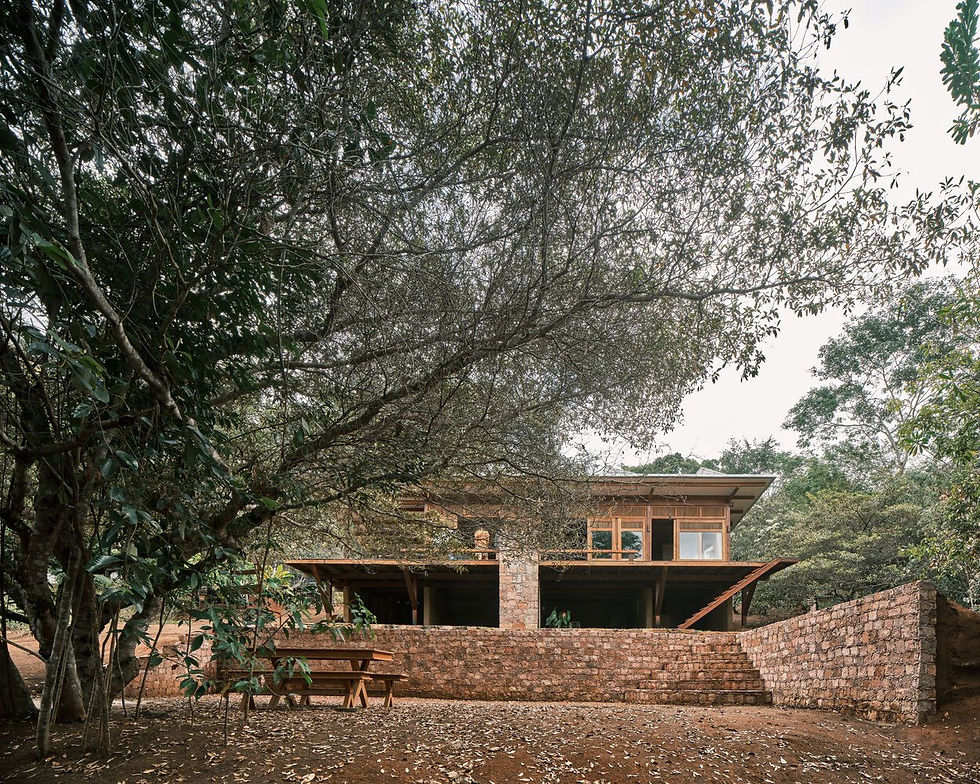
In the mountainous region of Rio de Janeiro, Brazil, Gávea Arquitetos designed a series of retreats known as Zero Cabins. Completed in 2022, Cabana Zero is the prototype for 11 shelters built to serve a spiritual retreat program inspired by the Indigenous traditions of the Peruvian Amazon. The architects approached the project with a strong emphasis on low-impact construction, ensuring a minimal disturbance to the forest both during the process and in the project's long-term environmental presence. Constructed on challenging terrain, Cabana Zero is a modular wooden structure elevated from the ground. This design choice minimizes the alteration of the topography and simplifies the overall construction system. Reusing materials from an old shed on the site, the project features treated pine walls and avoids electricity and hot water. It also incorporates a dry toilet system, reflecting its off-grid, low-impact philosophy. The cabins are designed to be temporary, eventually meant to revert to the forest, mirroring the impermanent human occupation of the natural landscape. The aesthetic reflects a duality in how the cabin relates to its occupants and the surrounding environment. The interior features natural pine, contrasting with the exterior's black-stained wooden verandas. This creates a deliberate abstraction that immerses occupants directly into nature. Large openings allow for ample natural light and ventilation, reinforcing the connection between the interior and the exterior. In addition to the cabin itself, the project includes the restoration of native vegetation around the site and the creation of trails that allow access to specific areas of the forest without causing damage. Credits Architecture: Gávea Arquitetos Location: Areal, Rio de Janeiro, Brazil Photography: Pedro Kok


0
Views
...
0
Project

Since
Architecture Office



0
Views
...
0
Project

No Brands yet.
No Projects yet.
No Projects yet.
No Projects yet.

Completed in 2021, Cabin Solena by Desterro Arquitetos is a 28-square-meter micro-dwelling and retreat located on a rural property in Flores da Cunha, Brazil. The clients sought a refuge that would allow for a deep connection with nature. The project is composed of two distinct volumes and is focused on immersing guests in the surrounding natural environment, which includes fruit trees, a small creek, and local wildlife. The main volume of the cabin features a gable roof that extends nearly to the ground, with floor-to-ceiling windows at either end providing expansive views of the natural scenery. Inside this space, a bed and a small kitchenette are arranged, along with a wood-burning stove for heating. A skylight in the roof allows for both daytime and nighttime sky viewing. A smaller, attached volume contains the bathroom, which also features a floor-to-ceiling window to connect the user with nature while showering. A commitment to integration with nature is highlighted by the architects' decision not to install blinds or curtains, allowing for a direct experience of the weather, time of day, and sounds of the outdoors. The program extends outdoors onto a deck, which features an outdoor table, grill, and a wood-fired hot tub. The use of fire is a key element of the experience, utilized in the hot tub, grill, and indoor stove. The entire interior is clad in wood, and the structure is supported by a metal frame that touches the ground at minimal points to respect the terrain. Credits Architects: Desterro Arquitetos (Arthur Lins, Felipe Cemin Finger, Vitor Sadowski, David Sadowski) Photography: Geórgia L. Thomé Location: Flores da Cunha, Brazil Year: 2021 Manufacturers: Garimpo Moderno, Isover - Saint Gobain, Lorenzetti, Metavilla, Tramontina
Architects:

In the mountainous region of Rio de Janeiro, Brazil, Gávea Arquitetos designed a series of retreats known as Zero Cabins. Completed in 2022, Cabana Zero is the prototype for 11 shelters built to serve a spiritual retreat program inspired by the Indigenous traditions of the Peruvian Amazon. The architects approached the project with a strong emphasis on low-impact construction, ensuring a minimal disturbance to the forest both during the process and in the project's long-term environmental presence. Constructed on challenging terrain, Cabana Zero is a modular wooden structure elevated from the ground. This design choice minimizes the alteration of the topography and simplifies the overall construction system. Reusing materials from an old shed on the site, the project features treated pine walls and avoids electricity and hot water. It also incorporates a dry toilet system, reflecting its off-grid, low-impact philosophy. The cabins are designed to be temporary, eventually meant to revert to the forest, mirroring the impermanent human occupation of the natural landscape. The aesthetic reflects a duality in how the cabin relates to its occupants and the surrounding environment. The interior features natural pine, contrasting with the exterior's black-stained wooden verandas. This creates a deliberate abstraction that immerses occupants directly into nature. Large openings allow for ample natural light and ventilation, reinforcing the connection between the interior and the exterior. In addition to the cabin itself, the project includes the restoration of native vegetation around the site and the creation of trails that allow access to specific areas of the forest without causing damage. Credits Architecture: Gávea Arquitetos Location: Areal, Rio de Janeiro, Brazil Photography: Pedro Kok
Architects:


"The MINIMOD Catuçaba is a pair of prefabricated wooden cabins, designed by the Brazilian architecture firm MAPA and completed in 2015. Developed as part of MAPA's portable housing series, the MINIMODs were installed on a sprawling property in Catuçaba, near São Paulo, Brazil. The project serves as a contemporary reinterpretation of the primitive retreat, offering an immersive connection to the natural landscape. The cabins were constructed in a factory in an industrial town, transported over 150 km in separate modules, and then assembled on-site using crane trucks. This process highlights the efficiency and environmental responsibility of prefabricated construction. Each module is a 3x3x3 meter cube, built with cross-laminated timber (CLT) technology, a system that was unique in Brazil at the time. The two cabins were installed approximately 1,000 meters apart in different landscapes on the property, each adapting its spatial configuration to its specific location. The first MINIMOD, situated on a hilltop, adopts a cruciform layout, with each space oriented towards a different cardinal direction. This arrangement offers occupants a panoramic experience of the surrounding nature, from dawn to dusk. The second MINIMOD is placed discreetly near a small pond, turning its back to the access road. This linear configuration, parallel to the hill slope, integrates with the landscape and opens onto an expansive deck. Both cabins feature large windows that blur the line between interior and exterior, framing captivating views of the forests, lake, and mountains. The design prioritizes a minimalist aesthetic, with a compact and efficient layout. The simple yet elegant cabins act as ""plug-and-play"" devices, ready to connect with and be used in any remote setting. Credits Architects: MAPA (Luciano Andrades, Matías Carballal, Rochelle Castro, Andrés Gobba, Mauricio López, Silvio Machado) Project Team: Pablo Courreges, Diego Morera, Emiliano Lago, Mauricio Müller, Camilla Pereira Construction: CG Sistemas Hydraulic Project: Eng. Júlio César Troleis Electrical Project: Eng. Ari Martins Colares Photography: Leonardo Finotti"


Architects:


"Situated at the Fazenda Pedra Alta farm in Joanópolis, Brazil, the Altar Ninho Cabin by Natureza Urbana is an elevated, sustainable, and compact retreat designed for deep immersion in nature. Completed in July 2023, the 20-square-meter treehouse-style cabin is part of Altar's broader initiative to create decentralized hotels, offering a glamping experience that uses technology to promote sustainable hospitality. The cabin was constructed with a prefabricated metallic structure to minimize environmental impact and reduce on-site construction time. Elevated on metal pillars to a height of up to four meters, the structure's off-the-ground position reduces its footprint on the landscape, preserves the natural topography, and gives guests expansive views over the surrounding Atlantic Forest and the Joanópolis Reservoir. Inside, the living, kitchen, and bedroom spaces are integrated into a single, light-filled environment, with a strategically placed large opening next to the queen-size bunk bed offering direct and immersive views of the reservoir. The bathroom is illuminated by a zenithal opening, providing views of the sky and treetops from within. The interior and exterior spaces are connected by a generous natural wood deck, where guests can enjoy a leisurely area with furniture, a shower, a barbecue grill, and a space for a bonfire. The project's design prioritizes a rational and sophisticated geometry, with a simple yet elegant aesthetic that seamlessly integrates with the forest environment. A 2022 collaboration with Tok&Stok, which included a line of furniture and decorative items designed by Natureza Urbana, informed the cabin's sustainable ethos. Project credits Architecture and design: Natureza Urbana Photography: Maira Acayaba Client: Altar Design and furniture collaboration: Tok&Stok"


Architects:


"The Jaguatirica Cabin, designed by Pitta Arquitetura and completed in 2021, is a minimalist and sustainable 65-square-meter retreat located in the Atlantic Forest of Ubatuba, Brazil. Situated within a vast forest reserve, the cabin was conceived as a ""cocoon"" to allow guests a serene and intimate connection with the lush, biodiverse natural surroundings. The design is a testament to low-impact construction, blending architectural form with the untouched landscape. To minimize its environmental footprint, the project utilized a lightweight, dry construction system that allowed for rapid assembly and produced very little material waste. The structure features a metal frame with wood-frame panels and a waterproof thermoplastic cover, all chosen to respect the natural topography of the site. Natural materials like wood, glass, and exposed concrete were selected to create a welcoming atmosphere that integrates seamlessly with the forest setting. The cabin's elevated position further reduces its impact on the ground. The cabin’s architecture is defined by its focus on natural light and expansive views of the forest. Large openings and sliding glass doors on the main facade invite the surrounding nature inside, creating an immersive, well-ventilated living space. A prominent 2.5-meter eave extends from the roof, providing shade from the sun and shelter from rain while still allowing ample natural light to enter. The interior is organized as a single, open-plan space that integrates the living room, bedroom, and kitchen without partitions, which enhances the feeling of spaciousness and reinforces the connection to the outdoors. Credits Architects: Pitta Arquitetura (Thiago Brunini Pitta, Rodrigo Alves Pereira) Landscape: Paisagismo Plantare Photography: João Paulo Soares de Oliveira Client: Fazenda Ressaca Manufacturers: Bio empreendimentos, Estruturas do vale, Marcenaria G.M, Mundo das Pedras, Pau Pau Pisos em Madeira"


Architects:


"Completed in 2018, Chalet M is a tiny, minimalist cabin designed by São Paulo-based architect Silvia Acar Arquitetura for a secluded woodland site in São Lourenço da Serra, Brazil. The 270-square-foot structure was created as a peaceful retreat for its owners to reconnect with nature. Due to the challenging, remote terrain and lack of vehicle access, all building materials were selected to be lightweight and were carried to the site by hand, ensuring the cabin has a minimal impact on the environment. The cabin was elevated off the ground on six cylindrical concrete columns, allowing it to rest lightly on the forest floor. The exterior is comprised of a massive hardwood structure covered with OSB plywood, a Tyvek air and water barrier, and corrugated metal sheets for the outer layer. Its dark exterior helps the structure blend seamlessly into the lush surrounding forest. A floor-to-ceiling glass facade is the focal point of the design and includes sliding glass panels that open onto a wooden deck. This feature visually and physically connects the interior with the landscape, which includes a lake and mountain views. Inside, the cabin's material palette consists of thermoacoustic insulation and light-toned paricá plywood for the walls, ceiling, and built-in furniture. A prefabricated fiberglass box base anchors the sleeping and storage area. The custom-built furnishings and compact design provide a cohesive, multifunctional space for sleeping, cooking, and simply enjoying the natural surroundings. Credits Architect: Silvia Acar Arquitetura Photography: André Scarpa Manufacturer: Indusparquet"


Architects:


"Elo Studio is a compact, 15-square-meter container home designed by the São Paulo-based architecture and interior practice Ticiane Lima Arquitetura & Interiores. Completed in 2020 as a prototype for the Janelas CASACOR 2020 exhibition, the project was conceived as a response to the post-pandemic context, reflecting on how living spaces could be rethought for well-being. It was inspired by the artwork ""elo"" by Ricardo Bueno, which joins brass and delicate blown glass, and the studio sought to emulate the artwork's concept of inhabiting a fragile yet supportive space. The prototype was showcased in a landscape setting in São Paulo, featuring large window openings that connect the minimalist interior with nature. The design incorporates Scandinavian influences, utilizing light-toned wood and focusing on multifunctional spaces. To maximize the small area, the interior includes a kitchen, an office, a bedroom, and a bathroom, with distinct areas created through wooden screens and contrasting materials. The house also emphasizes sustainability, featuring a green roof designed by landscaper Flávio Abílio and a solar panel system for energy. Credits Architects: Ticiane Lima Arquitetura & Interiores Landscaper: Flávio Abílio"


Architects: