

Finland
The rank indicates the popularity of a country among users. By clicking on the 'Appreciate' button, you can contribute to elevating a country's rank. Each 'Appreciate' click adds to the country's rank, so feel free to express your appreciation by boosting countries with content that resonates with you.
3
Rank
...
Views
11
Please login to appreciate


Architects:
Area:
38,000 m2
Year:
2015
City:
Helsinki
Client:


No Buildings yet.
No Architecture Offices yet.

Since
Architecture Office

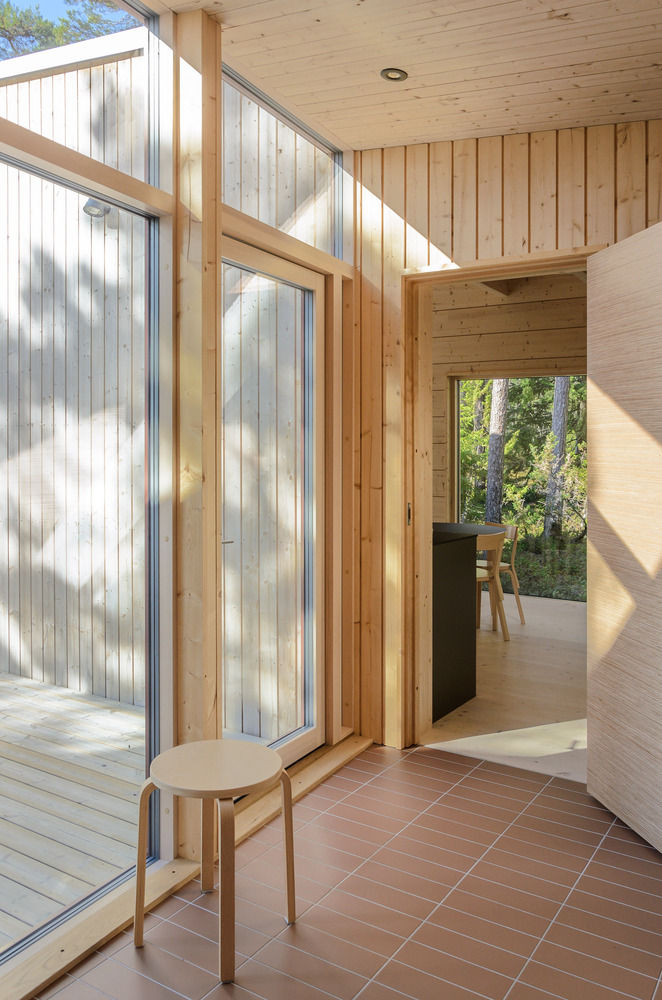
"Situated on a rocky, forested site in Salo, Finland, the Two Sisters Holiday Home by MNY Arkitekter was designed for two siblings and their families. This vacation residence thoughtfully balances communal living with the need for individual privacy by dividing the program into two distinct units. The structures are arranged in a ""down-to-earth"" fan shape that preserves the surrounding pine trees and visible rocks, with the buildings' large windows oriented to maximize views toward the sea. The design is a contemporary expression of the traditional Finnish cabin, composed of four interconnected sections of varying heights. The units are joined by a central, sheltered terrace that serves as a shared outdoor living space. A narrow, inviting entrance is nestled between the two primary volumes, offering a first glimpse of the landscape beyond. The layout was specifically crafted to ensure that each unit enjoys equally impressive views, while interior sightlines between the two are intentionally limited, creating a sense of shared presence without sacrificing privacy. The holiday home was constructed using a prefabricated 180mm log frame, which was then clad in vertical spruce with a silicon treatment to achieve a weathered silver-grey finish that blends with the natural surroundings over time. The interior spaces celebrate this honest material palette, with visible roof beams and exposed wooden surfaces treated with lye to create a bright, serene atmosphere. Striking black fireplaces and dark built-in furniture provide a contemporary contrast to the light wood. Sustainability was a key consideration in the project. The building utilizes a prefab structure to minimize waste and features glue-laminated timber beams and recycled wood fiber insulation. Natural ventilation, air-source heat pumps, and underfloor heating contribute to the home's energy efficiency. Project credits Architecture and principal design: MNY Arkitekter (Mathias Nyström) Photography: Multifoto AB"




0
Views
...
0
Project

Since
Architecture Office

"Named after the Finnish word for ""candle,"" the Kynttilä cabin by ORTRAUM Architects is a tiny, sustainable meditation retreat located on a narrow, forested peninsula in eastern Finland. Sited on Lake Saimaa, near Savonlinna, the 15-square-meter cabin was designed with a Zen philosophy of ""nothingness,"" stripping the design to its bare minimum to create a space for spiritual and visual focus. At night, the illuminated cabin shines on the lake like a warm candle, a key part of its design concept. The cabin was designed to minimize its impact on the protected nature reserve, and the process of building it reflects this commitment. To avoid damaging the forest vegetation, a temporary road was built for a single day to assemble the prefabricated structure. The vegetation was then restored to its original state once the construction was finished. The structure is primarily composed of cross-laminated timber (CLT), which is exposed on the interior to create a warm, minimalist, and natural aesthetic. The exterior is clad in larch boards, allowing the cabin to blend harmoniously with its surroundings. The gabled ends of the cabin feature full-height glazing, maximizing the connection to nature and providing panoramic views of the water on both sides of the peninsula. The interior includes built-in furniture and a sleeping bunk accessed by a ladder, demonstrating an efficient use of the compact space. Project credits Architecture: ORTRAUM Architects Photography: Marc Goodwin-Archmospheres, Martin Lukasczyk"


0
Views
...
0
Project

2018
Since
Architecture Office
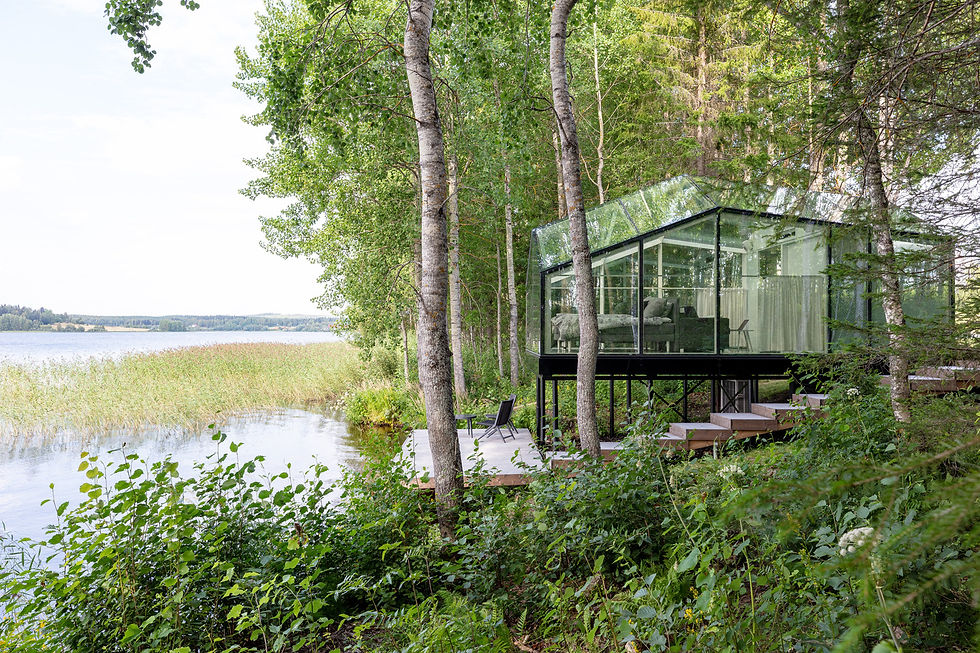
"The Lucia Smart Cabin is a 24-square-meter glass-and-steel modular unit designed in 2019 by Finnish firm Pirinen Salo Oy for the glass construction company Savon Lasituote Oy. Conceived as a high-quality ""hideout"" or experiential space, the cabin was created to offer occupants uninterrupted, panoramic views of the surrounding landscape, including the sky. The initial prototype was installed in Inari, Finland, near Juutuanvuono Lake, with an almost 360-degree vista of the riverside site. A core principle of the design is seamless integration with nature. This is achieved through its mirrored glass exterior, which reflects the environment and makes the cabin appear to blend in with the trees. The sleek black steel frame and floor ribbon also minimize the visual impact on the landscape. The interior is designed to draw attention outwards, with uniform colors and materials that do not distract from the external view. The triangular shape of the steel beam structure and the angle of the glass surfaces are precisely calculated to optimize sightlines, especially for someone lying in bed. High performance in challenging climates is a key feature of the Lucia Smart Cabin. The structure uses high-tech thermal glass, tested to withstand frigid temperatures, and includes an integrated heated floor system. Integrated lighting within the steel frame illuminates the interior without cluttering the glass and uses the surfaces to create a dynamic, multi-dimensional effect. For privacy or cooling, options such as curtains or customized prints can be added to the glass. The units are prefabricated and delivered to the site ready for installation on foundations with infrastructure connections. The compact but efficient interior accommodates a king-size bed, a small kitchenette, a dining area, and a bathroom. An exterior patio and a path to the water's edge extend the experience to the outdoors. Credits Architects: Pirinen Salo Oy (Teemu Pirinen, Lauri Salo) Manufacturer: Savon Lasituote Oy (Kai Nikula, Jani Leinonen, Kari-Matti Ruhanen) Construction Engineer: Hannu Nivalainen of Ylä-Savon Rakennesuunnittelu Ky Constructor: Meserak Oy (Pekka Repo, Hannu Komulainen, Toni Komulainen) Landscape Architects: VSU Maisema-arkkitehdit Oy (Outi Palosaari, Saara Oilinki, Katri Nuutinen) Photography: Marc Goodwin HVAC: Sami Säisä of Hanakat Iisalmen Putkiasennus Oy Electrical Engineering and Implementation: Mikko Murtola of Iisalmen Sähkö- ja automaatiosuunnittelu Oy Carpentry and Fixtures: Juha Huttunen with Miikka Bär from Vahtituvan puusepänverstas and B Design Oy Fireplace and Chimney: Sydänmuuraus Oy Interior Design (Red Cabin): Lomallo Consultants: RP-Teollisuuspalvelu Modular Building Solutions and Materials: Sika Finland (various Sika products)"


0
Views
...
0
Project

No Brands yet.


.png)


No Projects yet.
No Projects yet.


Nestled in a pine forest on a secluded lake an hour's drive from Helsinki, Villa Rauhanniemi is the minimalist vacation home of interior architect Joanna Laajisto and her family. Completed in 2020, the 90-square-meter cabin was thoughtfully designed to minimize its impact on the natural environment and to foster a deep connection with the surrounding wild forest and water. The structure of Villa Rauhanniemi, a wood and glass building, is elevated on a platform that both provides stability and serves as a wraparound balcony, allowing the family to live as much outdoors as possible. To construct the home with minimal disruption to the forest, large machinery was not permitted on-site, and materials had to be carried in by hand. The trees removed during construction were repurposed to create the outdoor benches. Large panoramic windows were incorporated to blur the line between interior and exterior, framing spectacular views of the lake and ensuring that each room feels spacious despite the home's compact size. Reflecting Laajisto's Scandinavian design philosophy of not cluttering the world with unnecessary things, the interior is crafted from a warm, natural material palette that includes Douglas fir, light pine, and oak. Wide oak floorboards provide a sense of refined rusticity, while grey marble countertops and a fireplace in the living area add warmth and sophistication. The kitchen was intentionally kept simple and stripped back to maintain the character of a cabin rather than a residential home. In a nod to a classic Finnish feature, the house includes a sauna, which, along with the bathroom, is adorned with deep red tiles in a herringbone pattern. Villa Rauhanniemi was also conceived with sustainability in mind. Laajisto and her family own the adjacent plot of land, which they maintain as a wild forest and a carbon sink to balance the home's footprint. Credits Designer: Joanna Laajisto, Studio Joanna Laajisto Photography: Mikko Ryhänen
Architects:


"Situated on a rocky, forested site in Salo, Finland, the Two Sisters Holiday Home by MNY Arkitekter was designed for two siblings and their families. This vacation residence thoughtfully balances communal living with the need for individual privacy by dividing the program into two distinct units. The structures are arranged in a ""down-to-earth"" fan shape that preserves the surrounding pine trees and visible rocks, with the buildings' large windows oriented to maximize views toward the sea. The design is a contemporary expression of the traditional Finnish cabin, composed of four interconnected sections of varying heights. The units are joined by a central, sheltered terrace that serves as a shared outdoor living space. A narrow, inviting entrance is nestled between the two primary volumes, offering a first glimpse of the landscape beyond. The layout was specifically crafted to ensure that each unit enjoys equally impressive views, while interior sightlines between the two are intentionally limited, creating a sense of shared presence without sacrificing privacy. The holiday home was constructed using a prefabricated 180mm log frame, which was then clad in vertical spruce with a silicon treatment to achieve a weathered silver-grey finish that blends with the natural surroundings over time. The interior spaces celebrate this honest material palette, with visible roof beams and exposed wooden surfaces treated with lye to create a bright, serene atmosphere. Striking black fireplaces and dark built-in furniture provide a contemporary contrast to the light wood. Sustainability was a key consideration in the project. The building utilizes a prefab structure to minimize waste and features glue-laminated timber beams and recycled wood fiber insulation. Natural ventilation, air-source heat pumps, and underfloor heating contribute to the home's energy efficiency. Project credits Architecture and principal design: MNY Arkitekter (Mathias Nyström) Photography: Multifoto AB"
Architects:

"Named after the Finnish word for ""candle,"" the Kynttilä cabin by ORTRAUM Architects is a tiny, sustainable meditation retreat located on a narrow, forested peninsula in eastern Finland. Sited on Lake Saimaa, near Savonlinna, the 15-square-meter cabin was designed with a Zen philosophy of ""nothingness,"" stripping the design to its bare minimum to create a space for spiritual and visual focus. At night, the illuminated cabin shines on the lake like a warm candle, a key part of its design concept. The cabin was designed to minimize its impact on the protected nature reserve, and the process of building it reflects this commitment. To avoid damaging the forest vegetation, a temporary road was built for a single day to assemble the prefabricated structure. The vegetation was then restored to its original state once the construction was finished. The structure is primarily composed of cross-laminated timber (CLT), which is exposed on the interior to create a warm, minimalist, and natural aesthetic. The exterior is clad in larch boards, allowing the cabin to blend harmoniously with its surroundings. The gabled ends of the cabin feature full-height glazing, maximizing the connection to nature and providing panoramic views of the water on both sides of the peninsula. The interior includes built-in furniture and a sleeping bunk accessed by a ladder, demonstrating an efficient use of the compact space. Project credits Architecture: ORTRAUM Architects Photography: Marc Goodwin-Archmospheres, Martin Lukasczyk"
Architects:

"The Lucia Smart Cabin is a 24-square-meter glass-and-steel modular unit designed in 2019 by Finnish firm Pirinen Salo Oy for the glass construction company Savon Lasituote Oy. Conceived as a high-quality ""hideout"" or experiential space, the cabin was created to offer occupants uninterrupted, panoramic views of the surrounding landscape, including the sky. The initial prototype was installed in Inari, Finland, near Juutuanvuono Lake, with an almost 360-degree vista of the riverside site. A core principle of the design is seamless integration with nature. This is achieved through its mirrored glass exterior, which reflects the environment and makes the cabin appear to blend in with the trees. The sleek black steel frame and floor ribbon also minimize the visual impact on the landscape. The interior is designed to draw attention outwards, with uniform colors and materials that do not distract from the external view. The triangular shape of the steel beam structure and the angle of the glass surfaces are precisely calculated to optimize sightlines, especially for someone lying in bed. High performance in challenging climates is a key feature of the Lucia Smart Cabin. The structure uses high-tech thermal glass, tested to withstand frigid temperatures, and includes an integrated heated floor system. Integrated lighting within the steel frame illuminates the interior without cluttering the glass and uses the surfaces to create a dynamic, multi-dimensional effect. For privacy or cooling, options such as curtains or customized prints can be added to the glass. The units are prefabricated and delivered to the site ready for installation on foundations with infrastructure connections. The compact but efficient interior accommodates a king-size bed, a small kitchenette, a dining area, and a bathroom. An exterior patio and a path to the water's edge extend the experience to the outdoors. Credits Architects: Pirinen Salo Oy (Teemu Pirinen, Lauri Salo) Manufacturer: Savon Lasituote Oy (Kai Nikula, Jani Leinonen, Kari-Matti Ruhanen) Construction Engineer: Hannu Nivalainen of Ylä-Savon Rakennesuunnittelu Ky Constructor: Meserak Oy (Pekka Repo, Hannu Komulainen, Toni Komulainen) Landscape Architects: VSU Maisema-arkkitehdit Oy (Outi Palosaari, Saara Oilinki, Katri Nuutinen) Photography: Marc Goodwin HVAC: Sami Säisä of Hanakat Iisalmen Putkiasennus Oy Electrical Engineering and Implementation: Mikko Murtola of Iisalmen Sähkö- ja automaatiosuunnittelu Oy Carpentry and Fixtures: Juha Huttunen with Miikka Bär from Vahtituvan puusepänverstas and B Design Oy Fireplace and Chimney: Sydänmuuraus Oy Interior Design (Red Cabin): Lomallo Consultants: RP-Teollisuuspalvelu Modular Building Solutions and Materials: Sika Finland (various Sika products)"
Architects:


"Located on a small, rocky island in Finland's Lake Suontee, Summerhouse V by Playa Architects is a 71-square-meter retreat completed in 2021. The project was commissioned by a family who found their existing 1960s fishing cabin too small for their needs and wanted a new building better suited for island living. The design draws inspiration from classic summer cabin aesthetics while incorporating modern functionality, with a central goal of connecting the occupants with the serene lake environment. The architectural response to the island's unique location and occasional strong winds is a practical and aesthetically refined structure. The summerhouse features a protective saddle roof with long eaves, which extends over covered outdoor spaces. These sheltered areas are protected from the wind by external walls that also serve to frame specific views of the lake. The house is intentionally positioned on the flattest and most scenic part of the island, maximizing both the open lake views and access to the evening sun. Construction was designed for efficiency and minimal environmental impact, using a non-insulated 200 mm thick cross-laminated timber (CLT) frame that could be easily transported and assembled on the island. Computer Numerical Control (CNC) machining of the CLT frame allowed for simple yet elegant detailing. The floor and roof were built with wood fiber insulation and LVL and glulam beams. The spruce frame and interior claddings were mostly left untreated, contributing to a natural, rustic feel. Inside, the main space, which combines the kitchen and living room, is defined by the visible saddle roof and the vast, open view of the lake. Credits Architects: Playa Architects Lead Architects: Tuukka Vuori, Ulla Kuitunen Photographer: Tuomas Uusheimo Location: Hirvensalmi, Finland"


Architects:


"The 600-square-foot Cabin K, also known as Saimaa Cabin, is a summer retreat in Finland designed by Seattle-based Studio Kamppari and completed around 2016. Perched on a granite ridge in a high-latitude pine forest, the cabin was built as a guest cabin and owner's retreat for an engineer who wanted to host his extended family and reconnect with the natural landscape. The design is a modern take on the traditional Finnish log cabin, blending traditional forms with contemporary details and focusing on natural light and open space. To minimize the impact on the site, which included a delicate landscape on a narrow ridge, the cabin's logs and window assemblies were prefabricated off-site and lifted into place by a crane. Built on post foundations, the cabin combines the traditional gable roof and log walls of Finnish cabins with unexpected details, volume, and quality of light. Locally sourced materials were used to complete the project on a limited budget. The exterior is protected from the elements by vertical pine screening treated with iron oxide, which accelerates the natural graying of the wood. The interior, in contrast, features untreated pine log walls and bare roof rafters, creating a warm and rustic aesthetic. The layout includes a double-height living room with oversized operable windows on the north and south sides that frame panoramic views of the forest and Lake Saimaa, blending the indoors with the outdoors. A whimsical, treehouse-like loft provides a cozy retreat, and two generous bedrooms bookend the living space. Credits Architects: Studio Kamppari (Sini Kamppari) Engineers: Matti Yli-Sissala"


Architects:

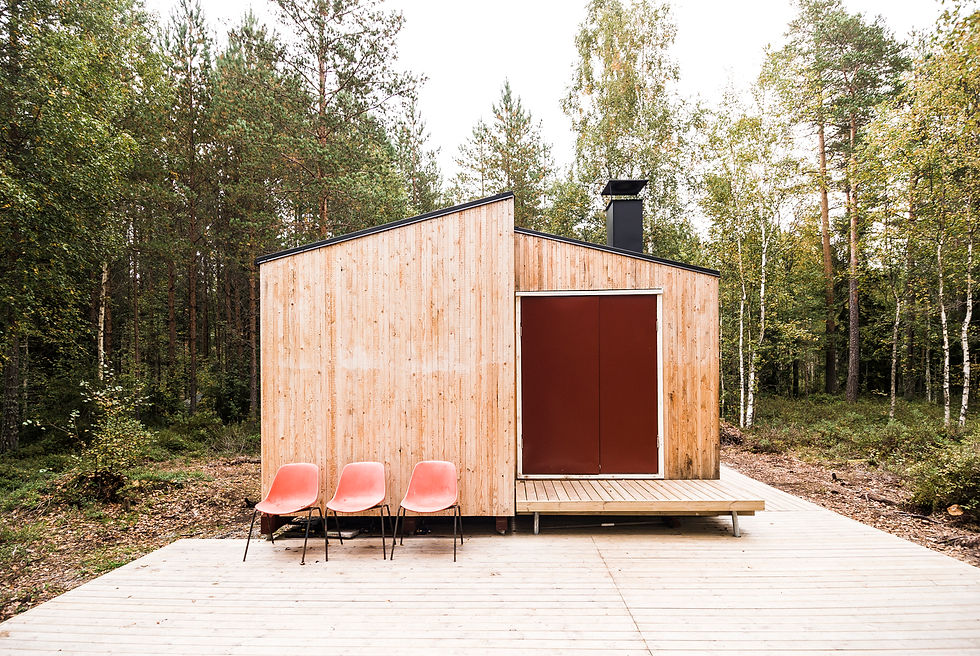
"Constructed by architecture and urban design students Timm Bergmann and Jonas Becker, who would later go on to found Studio Politaire, the ""Small but Fine"" Off-grid Cabin was completed in 2018 in a remote forest in Finland. The 280-square-foot structure was built on a modest budget of approximately $14,000, with the designers doing most of the work themselves. The off-grid cabin was designed as a simple and functional retreat to live in and reflect on self-reliance. Built on a rocky plot with a natural flat spot near a lake, the cabin’s design features four slightly offset rooms spread across a total floor space of 26.8 square meters, offering a different view of the surrounding landscape from each staggered window. The cabin's off-grid utilities include a water pump, a three-phase sewage system, and a hot water supply powered by solar energy and a wood-burning stove. To accommodate the cabin's location on swampy soil with no vehicular access, the designers first built a 650-foot-long elevated pathway to the nearest road. The foundation was built using concrete-filled steel pipes anchored into bedrock to ensure durability. The minimalist interior features wood-paneled walls and flooring, with plywood boards lining the ceilings. A wood-burning stove provides heat, while large windows allow natural light to flood the space and connect the occupants with nature. A small deck outside provides an open-air area for a tranquil retreat. Credits Architects: Timm Bergmann and Jonas Becker (Studio Politaire) Photography: André Boettcher, Studio Politaire"


Architects:


"Niliaitta is a prototype cabin designed by Studio Puisto Architects for the Kivijärvi Resort near Finland's Salamajärvi National Park. Completed in 2020, the cabin is part of a larger, ecologically sensitive tourism project that will eventually feature up to 50 unique dwelling units, as well as a sauna and conference center. The design is a modern interpretation of the traditional niliaitta, an elevated wooden hut historically used by the indigenous Sámi people to store food and other items away from bears and other wild animals. Niliaitta was conceived as a secluded, ""bear-cache"" for humans, providing a retreat from the chaos of modern life. The cabin is elevated on a single, slender concrete-filled steel column, which minimizes its footprint and allows the forest floor to remain undisturbed. The exterior is clad in black-toned pine, allowing the structure to blend with the surrounding trees, while the interior is lined with warm, light-toned wood. The 30-square-meter cabin features a minimalist and cozy interior, with all utility spaces—including a kitchenette, spacious shower, and building systems—cleverly contained within a central core. The central core design allows the living space to remain open and uncluttered, drawing attention to a full-height window that frames views of the surrounding nature. The interior also features wood surfaces and eco-wool insulation, with plastic avoided in the structure. A linear staircase provides access to the elevated cabin, creating a transition from the wild outdoors to a secure and tranquil retreat. Credits Architects: Studio Puisto Architects Structural Engineer: BD-Con Oy HVAC Designer: LVI-insinööritoimisto Jorma Niemonen Oy Photography: Marc Goodwin-Archmospheres Electrical Designer: Karawatski Oy"


Architects:


