

Ecuador
The rank indicates the popularity of a country among users. By clicking on the 'Appreciate' button, you can contribute to elevating a country's rank. Each 'Appreciate' click adds to the country's rank, so feel free to express your appreciation by boosting countries with content that resonates with you.
...
Rank
...
Views
0
Please login to appreciate
No Buildings yet.
No Architecture Offices yet.

2020
Since
Architecture Office

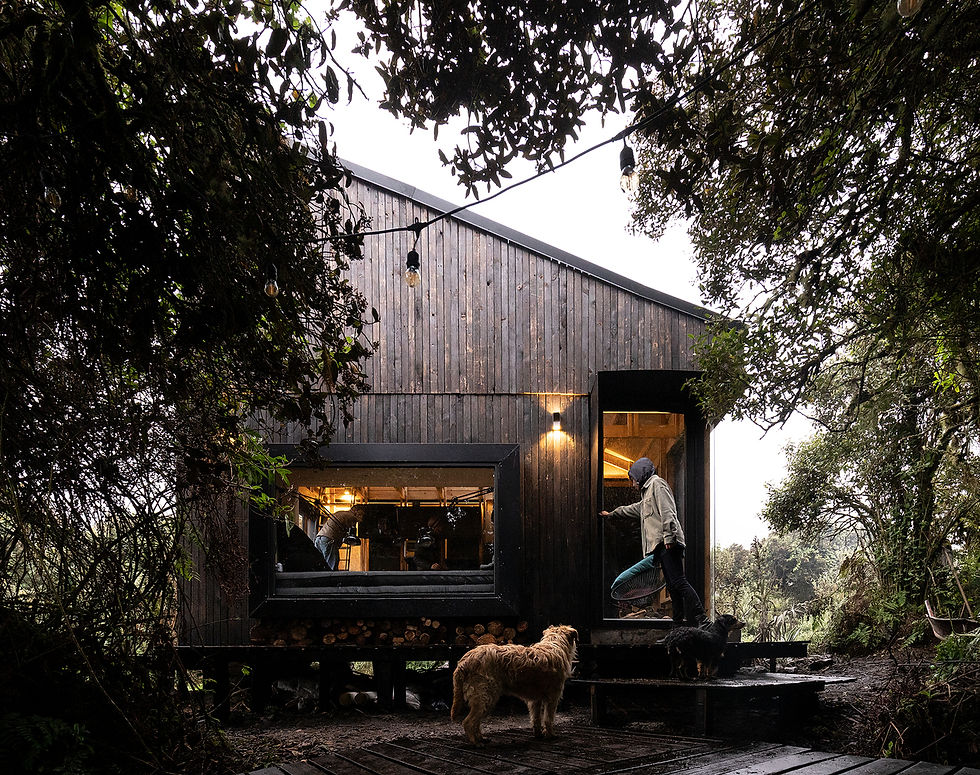
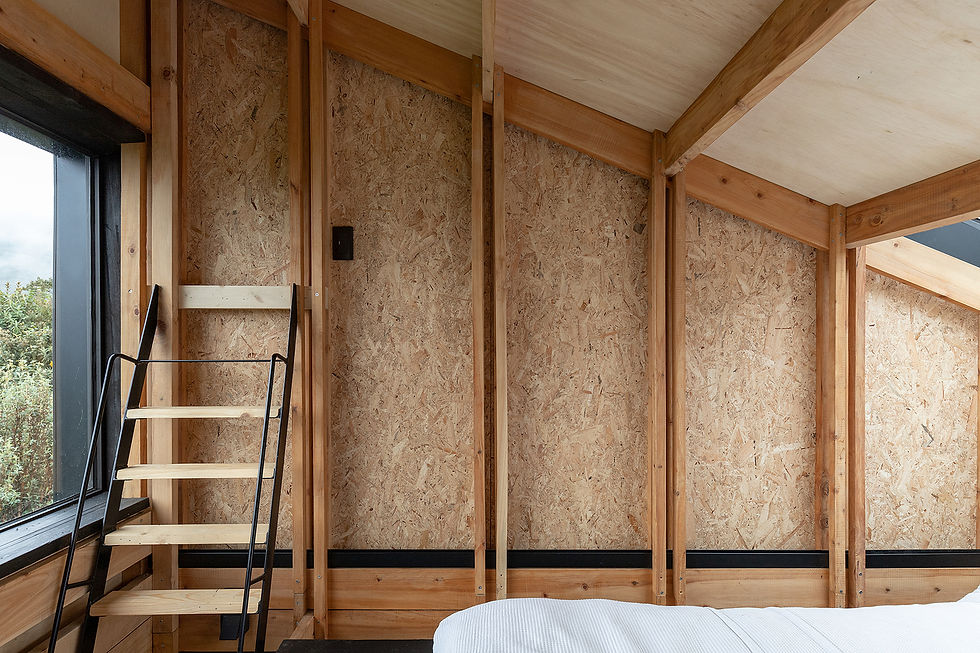
Named after the suliformes genus of seabirds, the SULA cabin by architect Diana Salvador is a prefabricated, A-frame home designed for the unique environment of the Galápagos Islands. Completed in 2023 on Santa Cruz Island for a local family, the project showcases an innovative approach to sustainable construction by minimizing environmental impact in a delicate ecological region. The two-story, modular cabin was prefabricated over two months in Quito, Ecuador, before its 2,000 custom-made components of wood, metal, aluminum, and glass were shipped in containers to the island. The components, held together by over 17,000 screws and pins, were assembled on-site in just four weeks by a specialized team. This prefabrication process avoided construction site damage to the soil. Inspired by bioclimatic principles, the cabin was elevated off the ground to allow for a cooling air chamber beneath it. A double-layered wall and roof structure, along with perforated floors, promote natural cross-ventilation, ensuring a comfortable interior climate. The five main materials—wood, stone, metal, glass, and PVC—were chosen for their efficiency and minimal ecological footprint. The interior features plywood paneling, creating a warm, inviting atmosphere that contrasts with the exterior. The main A-frame structure creates a double-height central space. A loft accessed by a sliding black metal ladder offers a flexible area for sleeping, working, or leisure. Large windows at each end of the cabin, along with two narrow windows on the sides, fill the space with natural light and frame views of the surrounding nature. The cabin was intentionally designed with scalability and relocation in mind, using gabions as foundations to further minimize the impact on the soil. Credits Architects: Diana Salvador Client: Catalina and family Prefabrication: Huaira Photography: JAG Studio Construction: Lahden Puurakentajat Transport: 2 trucks, 2 containers


0
Views
...
0
Project

2014
Since
Architecture Office

The 24-square-meter Casa Pukará is a small, prefabricated residential project built in 2024 by El Sindicato Arquitectura in the rural area of Cayambe, Ecuador. Located on the foothills of the Cayambe volcano, the design for this small dwelling was conceived as a way for the owner to participate directly in its construction, honoring a deep-seated desire to build with his own hands and strengthen his familial connection to the land. This approach was a direct response to the remote site's lack of electricity and logistical challenges that would have made transporting a fully assembled structure impossible. The house was entirely prefabricated as a series of ready-to-assemble panels, allowing the owner and his father to put it together using only basic cordless power tools like drills and screwdrivers, with an accompanying assembly manual. The design strategy carefully considers the local environment, with a low, blind façade oriented against the dominant winds and the main road, which contains the house's service areas. In contrast, the lateral façades open up generously to the landscape, with one framing a view of the valley and the other facing a reservoir and the volcano. The fourth facade, which faces the interior of the property, is opened only at the top to provide natural light without compromising privacy and houses built-in features like the kitchen, a library, and a storage cellar. Credits Architects: El Sindicato Arquitectura Lead Architects: Nicolás Viteri, Xavier Duque, and María Reinoso Lead Team: Erika Galarraga Design Team: Diana Padilla and Pablo Hidalgo General Construction: Micra and Pensar en madera Photography: Eduardo Espinosa Garate Illustrations and diagrams: El Sindicato Arquitectura, Erika Galarraga, and Eduardo Espinosa Garate


0
Views
...
0
Project

Since
Architecture Office

Designed by Javier Mera Luna in collaboration with Lesly Villagrán and María Beatriz Moncayo, "Arrachay 01" is a 25-square-meter workspace cabin perched over 4,000 meters above sea level in the Andes Mountains of Ecuador. Completed in 2020, the project was conceived as an auto-commissioned "workation" retreat to challenge new ways of working remotely in a stunning natural setting. The name "Arrachay" is a playful nod to the local Quichua language, combining achachay ("very cold") and arrarray ("very hot," referencing nearby thermal pools) to capture the contrast of the extreme mountain climate. The main architectural challenge was to create efficient insulation in the cold, high-altitude climate without relying on petroleum-based materials, which aligned with the architects' goal for a minimal carbon footprint. To achieve this, the team collaborated with YES Innovation to develop and utilize BIOM, a biosource insulation made from rice fibers. This innovative material repurposes agricultural waste from coastal communities in Ecuador, creating a circular economy. The BIOM insulation was hand-packed into the wooden perimeter structure and treated with a natural fire retardant, ensuring high thermal performance despite wide temperature variations. The use of bulk insulation also helps optimize on-site installation and prevent thermal bridging. The cabin’s timber structure is designed to be flexible and adaptive, blending harmoniously with the cloud-cloaked, mountainous landscape. A large window wall provides a visual connection to the breathtaking natural surroundings. The project embodies a philosophy of incorporating local technology and addressing environmental challenges through small-scale, thoughtful architecture. Credits Architects: Javier Mera Luna, Lesly Villagrán, and María Beatriz Moncayo Insulation Development: YES Innovation Photography: JAG Studio Location: Papallacta, Ecuador



0
Views
...
0
Project

No Brands yet.
No Projects yet.
No Projects yet.
No Projects yet.

Named after the suliformes genus of seabirds, the SULA cabin by architect Diana Salvador is a prefabricated, A-frame home designed for the unique environment of the Galápagos Islands. Completed in 2023 on Santa Cruz Island for a local family, the project showcases an innovative approach to sustainable construction by minimizing environmental impact in a delicate ecological region. The two-story, modular cabin was prefabricated over two months in Quito, Ecuador, before its 2,000 custom-made components of wood, metal, aluminum, and glass were shipped in containers to the island. The components, held together by over 17,000 screws and pins, were assembled on-site in just four weeks by a specialized team. This prefabrication process avoided construction site damage to the soil. Inspired by bioclimatic principles, the cabin was elevated off the ground to allow for a cooling air chamber beneath it. A double-layered wall and roof structure, along with perforated floors, promote natural cross-ventilation, ensuring a comfortable interior climate. The five main materials—wood, stone, metal, glass, and PVC—were chosen for their efficiency and minimal ecological footprint. The interior features plywood paneling, creating a warm, inviting atmosphere that contrasts with the exterior. The main A-frame structure creates a double-height central space. A loft accessed by a sliding black metal ladder offers a flexible area for sleeping, working, or leisure. Large windows at each end of the cabin, along with two narrow windows on the sides, fill the space with natural light and frame views of the surrounding nature. The cabin was intentionally designed with scalability and relocation in mind, using gabions as foundations to further minimize the impact on the soil. Credits Architects: Diana Salvador Client: Catalina and family Prefabrication: Huaira Photography: JAG Studio Construction: Lahden Puurakentajat Transport: 2 trucks, 2 containers
Architects:

The 24-square-meter Casa Pukará is a small, prefabricated residential project built in 2024 by El Sindicato Arquitectura in the rural area of Cayambe, Ecuador. Located on the foothills of the Cayambe volcano, the design for this small dwelling was conceived as a way for the owner to participate directly in its construction, honoring a deep-seated desire to build with his own hands and strengthen his familial connection to the land. This approach was a direct response to the remote site's lack of electricity and logistical challenges that would have made transporting a fully assembled structure impossible. The house was entirely prefabricated as a series of ready-to-assemble panels, allowing the owner and his father to put it together using only basic cordless power tools like drills and screwdrivers, with an accompanying assembly manual. The design strategy carefully considers the local environment, with a low, blind façade oriented against the dominant winds and the main road, which contains the house's service areas. In contrast, the lateral façades open up generously to the landscape, with one framing a view of the valley and the other facing a reservoir and the volcano. The fourth facade, which faces the interior of the property, is opened only at the top to provide natural light without compromising privacy and houses built-in features like the kitchen, a library, and a storage cellar. Credits Architects: El Sindicato Arquitectura Lead Architects: Nicolás Viteri, Xavier Duque, and María Reinoso Lead Team: Erika Galarraga Design Team: Diana Padilla and Pablo Hidalgo General Construction: Micra and Pensar en madera Photography: Eduardo Espinosa Garate Illustrations and diagrams: El Sindicato Arquitectura, Erika Galarraga, and Eduardo Espinosa Garate
Architects:

Designed by Javier Mera Luna in collaboration with Lesly Villagrán and María Beatriz Moncayo, "Arrachay 01" is a 25-square-meter workspace cabin perched over 4,000 meters above sea level in the Andes Mountains of Ecuador. Completed in 2020, the project was conceived as an auto-commissioned "workation" retreat to challenge new ways of working remotely in a stunning natural setting. The name "Arrachay" is a playful nod to the local Quichua language, combining achachay ("very cold") and arrarray ("very hot," referencing nearby thermal pools) to capture the contrast of the extreme mountain climate. The main architectural challenge was to create efficient insulation in the cold, high-altitude climate without relying on petroleum-based materials, which aligned with the architects' goal for a minimal carbon footprint. To achieve this, the team collaborated with YES Innovation to develop and utilize BIOM, a biosource insulation made from rice fibers. This innovative material repurposes agricultural waste from coastal communities in Ecuador, creating a circular economy. The BIOM insulation was hand-packed into the wooden perimeter structure and treated with a natural fire retardant, ensuring high thermal performance despite wide temperature variations. The use of bulk insulation also helps optimize on-site installation and prevent thermal bridging. The cabin’s timber structure is designed to be flexible and adaptive, blending harmoniously with the cloud-cloaked, mountainous landscape. A large window wall provides a visual connection to the breathtaking natural surroundings. The project embodies a philosophy of incorporating local technology and addressing environmental challenges through small-scale, thoughtful architecture. Credits Architects: Javier Mera Luna, Lesly Villagrán, and María Beatriz Moncayo Insulation Development: YES Innovation Photography: JAG Studio Location: Papallacta, Ecuador
Architects:

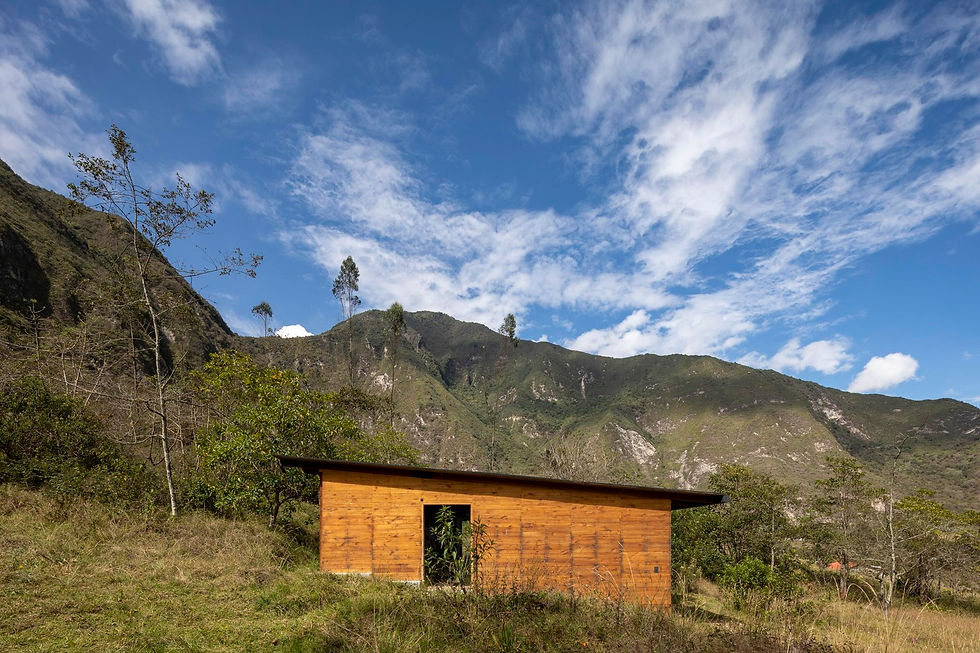
Built in 2019 in Calacalí, Ecuador, the Turin Horse is a 100-square-meter house designed by Jorge Ramón Giacometti Taller de Arquitectura. Situated on a slope inside the Pululahua Geobotanical Reserve, the project's main focus was to utilize natural and recycled materials to create a dwelling that would exist in harmony with its surroundings. The house's location provides expansive views of the crater, with vistas of the Chivo and Pondoña hills visible at sunset. The construction of the house started with a lightweight, braced wooden structure built on a concrete slab and a rear retaining wall. The walls were then filled using a technique of rammed and compacted earth mixed with hay bales, a system the architects referred to as "rammed earth with lost formwork". This creates sturdy, 12-centimeter-thick, earthquake-resistant walls. Recycled red pine staves were used to clad the exterior, while the roof was crafted from a lightweight layer of recycled triplex and asphalt resin. The interior of the house features a minimalist design with a focus on functionality and maximizing the connection to the outdoors. The large glass windows, a prominent feature of the design, allow for ample natural light and ventilation, while visually connecting the interior to the external landscape. The house was recognized for its use of sustainable and local materials, reflecting an eco-conscious approach to modern architecture. Credits Architect: Jorge Ramón Giacometti (Lead) Design Team: Francisco Trigueros, Santiago Vaca, Patricio Cevallos, Martin Feustel, Mathieu Lamour, Gabriel Utreras Betancourt, Las Manos Sucias Engineering: Patricio Cevallos Photography: Andrés Villota


Architects:

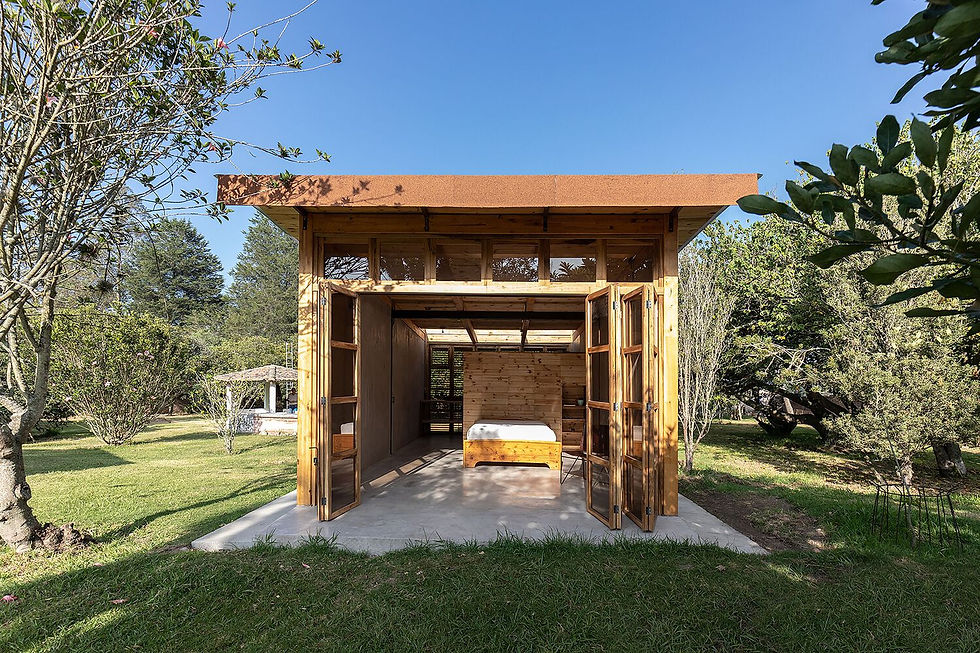
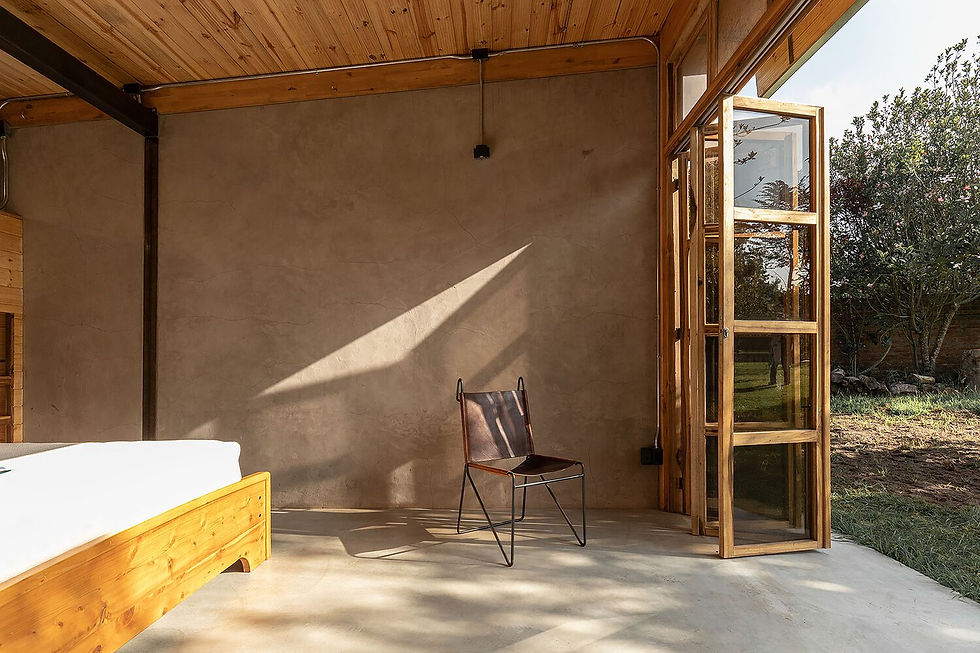
"The Guayabamba Cabin is a micro-architecture project located in the rural parish of Guayllabamba, Ecuador, an hour outside the city of Quito. Completed in 2021 by Quito-based architectural firm Rama Estudio, the cabin is a small, 33-square-meter wooden structure designed to blend into its surroundings while prioritizing sustainability and a connection with nature. Constructed with wood and a traditional Latin American technique called bahareque, which uses earth, straw, and wood, the cabin was designed with the intention of reclaiming local construction practices. This approach not only strengthens its connection to the land but also optimizes resources through material experimentation. The building is clad in small wooden panels, which give the structure a simple and timeless aesthetic. A central outdoor space and an elevated platform for the cabin allow it to connect seamlessly with the landscape and offer peaceful views of the lush green fields. The cabin was designed as a ""hospitality"" project, with a focus on creating a sustainable and adaptable retreat. This focus is part of Rama Estudio's broader architectural philosophy, which centers on sensitive approaches to natural context and resource optimization. The firm, co-founded by Felipe Donoso, Carolina Rodas, and Carlos Chávez, often integrates sustainable building materials like rammed earth, bamboo, and wood into its projects, reflecting a deep respect for the land and traditional building methods. Credits: Architects: Rama Estudio (Felipe Donoso, Carolina Rodas, Carlos Chávez) Photography: JAG Studio "

Architects: